Introduction
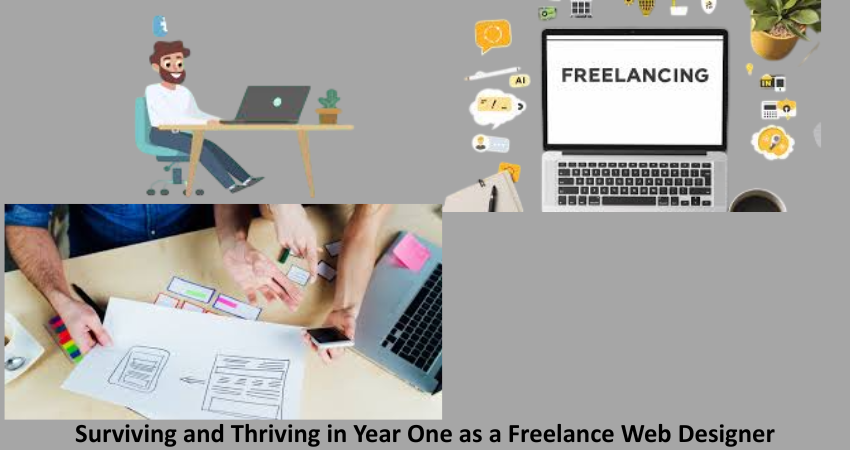
The freelance web designer’s path can be exciting and intimidating. You are entering a field of creativity, independence, and infinite possibilities; however, where there is also insecurity about income, difficulties with client management, and a need for self-promotion. Most of the growing pains take place during the first year; that said, it is also the stage when the foundations for long-term success will be established.
Designed to help a newly-fledged freelance web designer survive the first year and actually thrive, this guide will help you pinpoint the necessary skills, tools, and habits that can set you apart from competitors and convert your passion into an income.
Setting the Foundation for Success
Clarify Your Services and Target Market
Before beginning the designing process for the website, first, you must clearly define the services you would offer. Would you build a website from the ground up? Redesign an existing site? Offer a UI/UX analysis? Or do you only do eCommerce sites? The smaller your niche, the easier it is to sell your skills and better cast yourself as a pro and not simply another generalist.
Next, it’s time to decide who is going to benefit from your services. Will they be small local businesses, online entrepreneurs, or maybe startups? If you know who your audience will be, you can better fine-tune your outreach and messaging to give you the best chance of attracting some good clients right from the get-go.
Build a Portfolio That Reflects Your Strength
An impactful portfolio does not require dozens of projects; a few well-executed pieces demonstrating your range and problem-solving abilities are more important. If you have no real clients, do some mock projects for imaginary ones. Give them the same careful consideration you would if they paid you.
Each project in your portfolio should state the problem it designed to solve and share a little insight into your creative process. It should stress results, be it better usability or increased conversions. A great portfolio reassures prospective clients of your competence and their assurance that you cope with real-life challenges.
Mastering Time and Project Management
Create a Schedule and Stick to It
One of the most crucial challenges for beginners in freelancing is learning to manage time. Without any area for specifying work time, it becomes difficult sometimes to keep track of hours spent. Set your working hours just as in any regular job. A consistent schedule helps you both to be productive and avoid burn out.
Time-tracking tools such as Toggl or Clockify would come in handy if you wanted to see how time was spent during those hours, prove how much it will help you estimate future projects and keep you from undercharging for work that takes longer than expected.
Use Project Management Tools
Someone handles juggles clients and to-do lists without what in my opinion should be considered a good, proven system- that’s definitely stress-inducing. Trello, Asana, or Notion can help with tracking what’s needed for projects, and even nouns- discovering, wireframing, designing, feedback, and launch: dividing projects into phases:
It keeps clients updated by showing them that work and progress are being made. Communicate-all deadlines missed and files lost will never be forgotten. A good workflow helps empower your delivery of consistency while making sure you are on top of every detail.
Finding and Landing Clients
Start with Your Existing Network
Your first clients are probably from people you already know. Tell all your friends, family, and acquaintances that you’re freelancing. Even if they don’t want their own site, they might know somebody who does. Personal referrals directly create trust.
Social media platforms such as LinkedIn and Facebook provide a great opportunity to announce your services. Post a few snapshots of your portfolio, state a few things about your current projects, and give them value by offering free tips or insight. Visibility and trust take time to build.
Explore Freelance Marketplaces
In my view, Upwork, Fiverr, and Freelancer are an excellent places to start and get some experience. Competition is intense, and client rates may dishearten a newbie; however, if a few projects are completed successfully, a record and reviews start to be built.
When applying for jobs, ask yourself: Is this according to your choice? Write a personalized proposal explaining how you would be able to help with finding a solution to the client’s problem. As you build testimonials and a few completed gigs in your portfolio, you can start doing works off the sites and charge higher rates.
Building Long-Term Client Relationships

Communicate Clearly and Frequently
Professional communication is indeed a prominent way to gain a competitive edge as a freelancer. Right from the beginning, state what the expectations are: what shall be included in the project scope, how long the duration of the project is expected to take, how many revisions are allowed, and how payment will be managed. Continue to give updates, keeping your clients informed about the status of work even if it’s just to confirm that you’re on track. Communication builds trust, while lack of communication breeds misunderstanding. Once clients feel informed and respected, they are much more likely to refer you and hire you again.
Deliver More Than Expected
Going the extra mile does not mean giving away the farm. Sometimes it is as simple as delivering ahead of schedule, adding a small bonus feature, or preparing a video walkthrough on how to update their site. These touches have a powerful effect.When a client is ecstatic about your work, they become your greatest marketer. One happy customer can lead to many referrals and chances for repeat business, greatly reducing the time and effort spent trying to find new work. Excellent service is the glue that holds long-term freelancing together.
Pricing and Getting Paid
Understand Your Value
Most designers undervalue themselves when they are just starting in the trade. It is in our nature to want the job, but offering lower rates could be detrimental in times to come. A client perceives low cost as low quality. Besides, ensure that you charge enough for your time, software, taxes, and downtime.Most designers undervalue themselves when they are just starting in the trade. It is in our nature to want the job, but offering lower rates could be detrimental in times to come. A client perceives low cost as low quality. Besides, ensure that you charge enough for your time, software, taxes, and downtime.
Use Contracts and Invoicing Tools
Even for small jobs, make it a habit to use a contract. Contracts detail what is included, how payments are to be handled, and what happens when a client goes silent or changes direction. Tools like Bonsai or HelloBonsai have built-in templates making it very easy to protect yourself legally.
Consider incorporating invoicing tools like Wave, QuickBooks, or PayPal when it comes to issuing professional invoices and tracking payments. Make it as easy as possible for a client to pay you or to follow up on late payments. This will ensure timely payments that in turn help cash flows and ease financial stress.
Continuing to Learn and Improve
Stay Updated with Industry Trends
Web design is an indefatigable evolution, for new tools, styles, and technologies come. Attend to blogs on design, follow influentials in the industry, and read their online courses for continued relevance with that which is brought by sites like Smashing Magazine, CSS-Tricks, and Webflow University.Knowing trends such as mobile-first designs, dark mode, or even accessibility can elevate your work and give you something to talk about with clients. They will see you as a partner in the project and not just a pretty website builder.
Seek Feedback and Reflect
At the end of each project, you should sit back and reflect. What went well? What went wrong? What could be improved next time? Asking clients for feedback—positive or negative—enters into the development of you as a designer and the growth of their experience with you.
Learning is a continuous process. Each project becomes an occasion for improvement, refinement, and development. Never allow a mistake to discourage you; you may use it as a stepping stone to becoming an even more effective and professional freelancer.
Avoid Burnout with Work-Life Balance
Freelancing can sometimes crack the line between work and life. Long hours can easily turn into nights glued to your laptop. Burnouts come over time. Make sure you set boundaries: specific working hours, regular breaks, and time for your hobbies and rest.
The smartest elixir of success in freelance endeavors comes from working smartly, not from working longer hours. If you’ve taken enough time to pace and energize your mind, creativity and productivity improve. Apart from the clash taking place in a people’s life, it also brings a detrimental effect on the work quality and relationship between the clients and the one encountering it.
Celebrate Wins and Learn from Losses
Your first year will be a mixture of highs and lows. Some months will be busy, while others will feel slow. There will be dream clients and troublesome ones; that’s all part of the journey. Celebrate each win, no matter how small. Finishing a project, receiving a good testimonial, or learning a new tool-all are worthy wins.
Conclusion
During the initial year, a freelance web designer learns for time and again the chances that would come together equal to the challenges that lie ahead. Many hats get to be worn – designer, marketer, project manager, and sometimes even customer support. And with the right direction, systems that require further organization, and dedication to a cause, you could find yourself thriving instead of just surviving.
Communicating professionally, delivering quality work, managing time well, and keeping improving one’s skill levels, those will see to it that a career will come with a lot of freedom, intense creativity, and personal satisfaction. The road will almost forever not be smooth, but the immeasurable rewards called for demanding effort. Here’s wishing you a fabulous first year followed by many others!