However, in today’s competitive freelance web designing market, just being good enough with HTML and CSS is no longer enough. Clients look for professionals who understand other aspects of designing attractive websites: user focus, functionality, and results. This means that a broad but strategic skill set will go a long way in attracting most clients in less time.
Whether starting or intending to take your freelance web design business to the next level, a winning combination of technical and soft skills will empower you to stand out. The following guide will take you through essential freelance web designing skills that can fast-track you to landing more clients and developing lasting professional relationships.
Mastering Visual Design Fundamentals
Understand Typography, Color Theory, and Layouts
According to clients, websites are looking good, and this seems to come down to exactly good core visual design elements. A typography affects readability and user interpretation; color theories trigger emotional grounds and alignment with the brand; layouts influence user journey and clarity. These all will essentially govern use interaction with the websites, and they affect retention as well as conversion on the site.
Confident mastery over these basics leads clients to regard work as polished and professional. Time spent learning grid systems, visual hierarchy, and white space will produce positive design outcomes and a strong first impression; in fact, this often leads to other referrals and repeat jobs.
Build Consistent, Cohesive Brand Experiences
Freelance web designers should know how to sustain a brand feeling over a whole website. Were there fonts and colour palettes, tone of voice, and image styles? Every single visual decision made should act as a reinforcement for the identity of the client. This kind of consistency will not only ensure usability but also generate trust in the users, which is the main goal for clients.When conversely, it is the translating of brand values into an online experience that has cohesiveness-the strategic thought process enhances your perceived value. They will return to you for more than just the design but also for the digital telling of the brand story in a manner that really dovetails into their business efforts.
Proficiency in Responsive Design
Design for All Devices Seamlessly
Today more than ever, responsive design is obligatory because the web is dominated by mobile users. Knowing how to create layouts that morph and shift with diverse screen sizes-from desktops to smartphones-is essential. Clients will invariably favor the designers who can make sure that their site looks and functions well everywhere.
CSS Media Queries, flexible grids, and a whole scaled range of assets testify to your up-to-date understanding of modern browsing behaviors. With these in your bag, you would be the praise of many clientele: it would save from worrying about the loss of traffic due to poor mobile optimization, both from a user experience and SEO point of view.
Prioritize Mobile-First Thinking
Mobile-first design is not a trend; it’s a strategy that works. By forcing design for the smallest screens, it becomes a discipline to determine the most vital content and interactions. This means websites become more targeted and faster loading, something that has a big appeal to prospective clients.
This foresight and concern for the user in a mobile-first approach are why clients appreciate freelancers more. Making designs with real-world user behavior in mind, you create the perception of being a strategist rather than merely a designer.
Strong UX (User Experience) Knowledge
Understand User Behavior and Navigation Patterns
UX is everything in website design. It refers to how users perceive things: where they click, how they find their way around the site, and why they eventually leave. Designers-for-hire who work on the usability principles of intuitive navigation, low friction, and strong calls to action can create experiences that convert.
Clients love it when you speak their lingo, especially when it concerns results: bounce rates and conversion optimization, user journey mapping-these are all terms and concepts you use to prove that you design for outcomes, not merely for visual aesthetics.
Use Wireframes and Prototypes to Validate Ideas
Wireframes and prototypes provide an opportunity for your clients to see the goals that you are considering in relation to functionality versus things that go into the visual design. Programs like Figma or Adobe XD can show an early-stage click-through design that allows your client to interact with it and provide feedback.
This extra effort boosts the professionalism and adds to clients’ trust in you. They will then see you as being methodical and user-centered, thereby creating better communication, less revision cycles, higher satisfaction, all of which lead to faster project sign-offs and great testimonials.
Understanding Basic Front-End Development
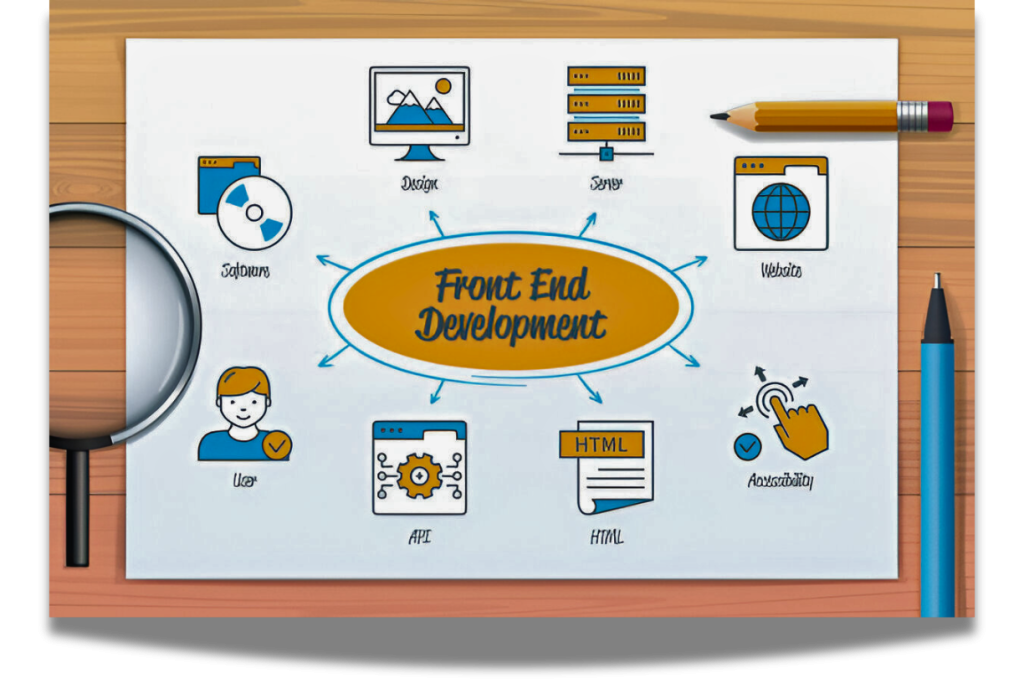
Learn HTML, CSS, and JavaScript
Now the freelance web designers are not supposed to be considered as full-stack developers, but this makes their life easier by knowing front-end codes such as HTML, CSS, and JavaScript. These are the elements of a website clients are looking for, having a hybrid design developer who can make workable sites from a design that he or she has to create.
The benefit comes when he has to do a handover of a complete project or make very quick tweaks on the front end. His value shoots up almost immediately. Clients will be seeing you as a one-stop solution, and you will eventually end up winning them over the value of time and savings.
Use Page Builders and CMS Tools Wisely
Being well-acquainted with platforms like WordPress, Webflow, or Shopify will change the game for you. Clients almost always want websites built on these platforms so they can manage the content themselves. As a freelancer, the ability to design and build within CMS environments makes you versatile.
Clients will find their way to you because you can help them achieve a quicker launch coupled with the ability to maintain their own sites afterward. It’s this mix of independence and functionality that usually seals the deal during discovery calls or proposal reviews.
SEO Knowledge for Designers
Optimize Site Speed, Images, and Code
Good design is only good if users can find the site-standing SEO for it. Correct. Search engine optimization is not the prerogative of the marketing team; designers have a fundamental role to play in the performance ranking either. This means compressing images, cleaning up code, and getting the site loaded as quickly as possible are just part of modern design workflows.
As designed with SEO in mind, clients stand a better chance of getting a good ranking. Clients understand the value of visibility, so this often becomes a major trust point and reason they choose you over competitors.
Structure Content for Search Engines
Structuring the content is another thing that must be considered along with speed. Headings, metadata, and semantic HTML use are indications of the hierarchy and relevance of a page to search engines. This means as a web designer, it will be your responsibility to structure content logically, crawlable, which boosts on-page SEO as well.
Your clients will appreciate an SEO-ready design, even if they hire someone else to fill in the content. It shows that you’re thinking holistically about how your work impacts business performance—and that’s a major contributor to referrals and repeat work.
Effective Communication Skills
Simplify Complex Ideas for Clients
Project could easily take a turn towards downfall if client fails to understand all your simple and relatable ways to communicate the ideas. Most of the clients are business owners, marketers, or startup founders–they are not web designers. They rely on you to understand and not make the overwhelming explanations.
Freelance web design has perhaps the most underrated soft skills. Clients want someone with whom they can relate and who will lead them through the process along the trail of technical jargon. From that point on, the clearer your communication, the quicker the client will feel confident to hire and to pay you.
Manage Feedback and Revisions Gracefully
Sometimes, feedback delivered at the ending of the project becomes too hard for any person to digest. Your client may simply disqualify a layout you worked hard to complete; either way, your response will have the potential to either build stronger walls of connectivity or create conflicts that may someday test the project’s progress. The functionally flawless, adrenaline-driven freelancer will forever remain on top if he accepts the critique gracefully, asks relevant clarifying questions, and revamps it to the system’s specifications.
A high sense of emotional intelligence is equally important to clients. An apparent mature and flexible person in handling revisions is regarded as a real partner-one who will not only be hired again but be actively recommended.
Portfolio Development and Presentation
Build a Portfolio That Solves Real Problems
Your portfolio is your power. It says much more than pretty pictures-it’s really showing how you solve problems. Each project should contain a description of the client’s issue, your solution, and the result (preferably with metrics or client quotes following it).
Making yourself that much more relatable and credible is this case-study approach. It has so much better effect for potential customers to see that you have made an improvement in site performance or conversions and picture themselves having you solve their problems. That’s when they come knocking.
Present Work Confidently and Professionally
But showing it is as vital as doing it. A properly organized portfolio, complete with clear pictures and good formatting and user-friendly navigation, proclaims your pride in your work. This reveals your commitment to user experience, which is precisely what clients have come to pay for.
Presenting self confidently-whether openly through your website, LinkedIn, or during discovery calls-bestows authority upon one. Clients converse only with people who seem to embody their process and communicate results-driven design clearly and convincingly.
Marketing and Outreach Know-How

Presence in the right arenas speeds the client-acquisition process; thus, use these tools for showcasing your work, networking with decision-makers, and gaining credibility: LinkedIn, Twitter, Instagram, and design-specific communities such as Dribbble or Behance.
Regular posting or sharing insights, before-and-after images, or project updates can grab the attention of potential clients actually going through these platforms. This organic visibility leads to inbound inquiries and word-of-mouth referrals.
Cold Outreach and Freelance Platforms
They shouldn’t be underemphasized, cold emails or portals such as Upwork, Freelancer, or Fiverr. No doubt, there lies competition, but freelancers who set up well, respond quickly, and lay out value in their proposals often find their way to the top.
Well thought out outreach messages along with researching potential clients and providing custom insights in proposals can quite dramatically be improved for response rates. Clients notice when you go beyond generic pitches, and they’re more likely to trust and go for the extra effort of hiring you.
Conclusion
Freelancing in web design is all about rapport and business sense, just as much as the consideration of clean layouts and modern aesthetics. By choosing to hone skills from the areas of design, development, communication, and marketing, you position yourself as a high-value service provider that clients can trust.
Hastened client acquisition is not a matter of trying one’s hands at every new trend that comes up, but the journey is, instead, a mastery of specialized skills designed to solve genuine business problems. When you join technical skills with user-focused strategy and client-centered communication, you become more than a freelancer-you become a partner in growth. And that is exactly the type of individual that clients want to hire, refer, and keep on retaining.