Introduction
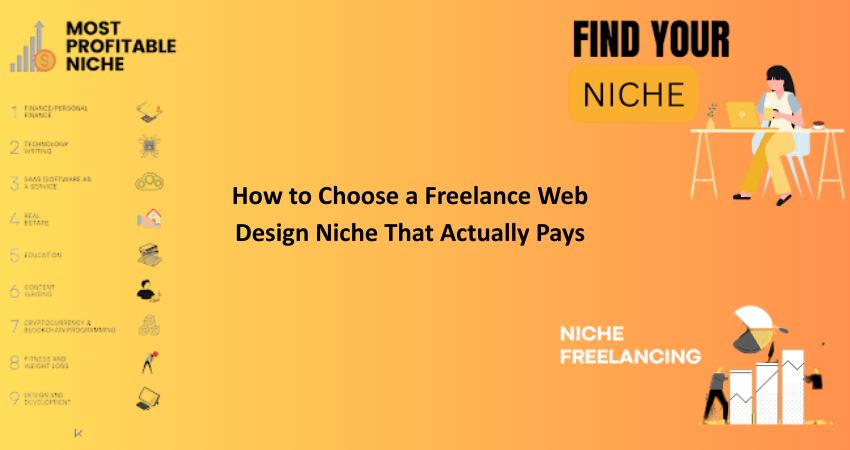
Freelancers need to realize that one of their most important career decisions will be deciding on a web design niche. Nowadays, with a larger number of companies transiting online, the demand for web design services is only getting stronger. It is also during this rising opportunity phase that competition becomes truly hard. Freelancers who position themselves as generalists are often unsuccessful in attracting truly lucrative job opportunities and have to concern themselves over price. The other class of designers tends to specialize in niches where they can build authority, gain high rates, and develop a steady source of their ideal clients.
A well-defined niche means being able to speak directly to the needs and goals of a specific population. This clearly makes your services more valuable and your marketing more effective. In this guide, we shall explain how to select a web design niche that fits your expertise and passion but, more importantly, one with realistic monetary prospects. You will learn how to make your decisions through market demand, how to validate those decisions, and how to create specialized portfolios that show off your work and draw clients in; essentially, how to make your mark in web design and be able to call yourself a freelancer on your own two feet.
Understanding the Importance of Niching Down
Why Generalists Struggle in the Freelance Web Design Market
These days, it isn’t easy to be the best in such a crowded freelance market as a web designer. Most generalists are caught in a rat race with hundreds of designers offering more than similar services. Oftentimes, when a freelancer tries to satisfy everyone, they end up not really being able to satisfy anybody because this approach does not only dilute one’s brand but makes it hard for one to earn premium rates. Clients need web design services usually are searching for experts who would understand their exact sector or audience. Thus, being a jack-of-all-trades can complicate proving your worth in a market that predominantly favors specialization.
You’ll have to split your concentration and research across various sectors, forcing you to do research in an area outside of your normal expertise, since you’re trying to serve too many sectors. Every new project can just turn out to be a long learning curve instead of a streamlined workflow. The inefficiency cuts into margins and more frequently leads to burnout. Niching solves this by enabling you to spend your energies and master one particular field area more quickly, thus speeding project turnaround, making quality work easier, and increasing your marketing ability to position yourself as the go-to expert. This prepares the ground for building trust and credibility with your ideal clients, who will ultimately pay you more and keep you around longer.
The Financial Benefits of Specializing
Niche orientation clearly declutters the process and is a significant factor in increasing potential earnings. Clients pay top dollar for someone who understands the unique challenges and goals of their specific industry. For example, a web designer who services only the dentist field can charge higher than a generalist because of this web designer’s insights about the industry and optimized layout strategies proven within dental practices. Such knowledge puts the independent contractor in the partnership rather than as an outsourced user for higher fees and repeat work.
Furthermore, the freelancers develop templates or systems that meet a particular area specialty, hence these templates or systems can be stored and quickly adapted for new clients. This makes them process-efficient and adopt more projects faster, further piling on the revenue. The deeper the understanding of a single niche, the more complementary services that can be offered, like SEO, content, or email marketing, for that particular industry. This deepens your value proposition and creates more streams of income from a single client base. Altogether, speak for the financial gain, with heavy emphasis on the chosen lucrative niches, when it comes down to founding an operative freelance web design existence.
Researching Profitable Freelance Web Design Niches
Analyzing Market Demand
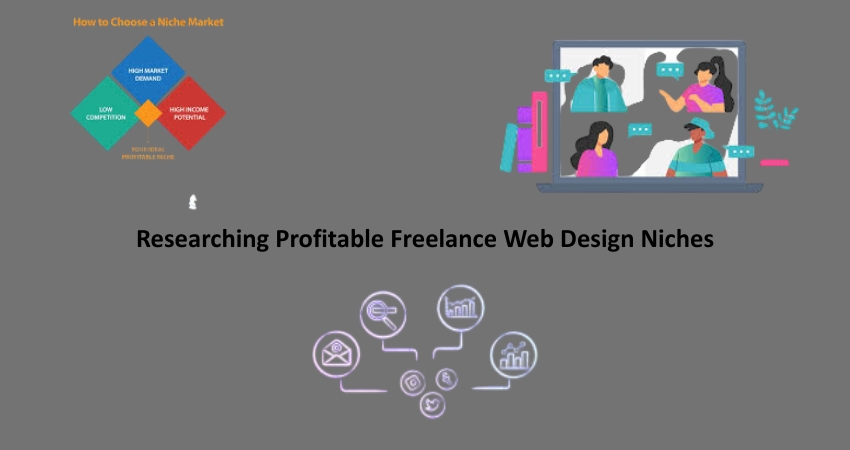
It is worthwhile to check the market demand before you engage a niche. You want potential clients flowing continuously into that niche requiring web design services. Begin to look into industries that are growing or underrepresented with respect to web presence. This includes small businesses, medical professionals, real estate agents, eCommerce stores, etc. Consider Google Trends, industry forums, or business directories to assess how many businesses there are in the niche and whether they actually own a live website. A good indication is that a high number of poorly designed or outdated websites will mean there are tons of potential customers.
Another great technique would be to scrape the job boards and freelancer marketplaces (such as Upwork, Freelancer, and Fiverr). Take a peek at how many listings are made with regard to different types of web design projects. Social media groups and LinkedIn, too, could give you ideas on how active your niche is. Are people asking for recommendations for web designers? Are they talking about upgrading or building websites? Market research will help you stay away from a niche that sounds great, yet offers no real economic opportunities. Remember to establish the fine balance between something that you are passionate about and skillful at and a niche that has real and ongoing requirements for quality web design services.
Evaluating Competition and Profit Margins
While it is important to analyze market demands, it is equally important to look at the competitive level in a niche. New entrants in a highly saturated niche generally have a greater challenge in filing the entry unless they have a different angle from that of other players or superior expertise. You may find keyword research tools to analyze how competitive the search terms are relative to your chosen niche. For example, if you are considering “web design for yoga studios”, check how many agencies or freelancers are already foraying into that market. Check the portfolios they boast of, pricing models, and client testimonials to assess whether you can be able to compete or will have to change your approach.
Profit margins also help in proving whether a niche is worth following. Niches like luxury real estate or elite eCommerce clients can expect clients with big-budget purchases into quality designs whereas non-profits or small local businesses have to be more cautious with the purse strings affecting a pricing strategy. Knowing the average customer lifetime value (CLTV) for your niche gives you an insight on how much clients are willing to spend not only going forward but also throughout the years on ongoing services. Therefore, you can predict your income more accurately and build a business model supporting your financial goals.
Matching Your Skills and Interests with Market Needs
Leveraging Your Background and Passion
Of course, choose a very similar niche to your earlier background, interests, or passion. If you have worked in healthcare before and now want to offer web design for medical professionals, it is quite rational because you already know their terms, specific problems, and expectations from clients. Hence, this could reduce your learning curve and be able to talk the language of your client, thereby quickly earning their trust and developing a good rapport with them. Passion is another strong motivating factor because designing websites for the specialty invested in would keep one constantly busy and alive, especially when work is challenging or business is slow.
Freelancers who are passionate about their niche often go the extra mile to deliver exceptional results, which can lead to strong client relationships and referrals. This emotional investment can also make marketing feel less like a chore and more like an extension of your personal interests. However, passion alone isn’t enough; it must be paired with real market demand to be viable. That’s precisely why the best niches are those where client enthusiasm and expertise overlap with clients who are ready and willing to pay for high-quality services.
Conducting a Personal Skills Audit
When considering which specific market segment to go into, consider your current abilities as compared to areas of knowledge deficiencies that will not allow you to pursue that path. Make an internal inventory of all your technical skills as well as synergies, keeping in mind design-application proficiency, coding languages, UX/UI principles, and various forms of working communication. Next, compare this list with the common skill sets in your field of interest. Like for example SaaS companies, in addition to that, you should probably have perfect skills in conversion-oriented design and user onboarding. For anything you feel deficient in, improve the skills by taking online courses, mentorship, or hands-on experience.
This will also help in one’s internal marketing. Perhaps you possess skills in convincing content writing or translating interfaces into intuitive experiences-these might bring you closer to the edge in your niche. Seeking a skill set that matches or exceeds the expectations of the target client entails not just competition but also instills confidence when pursuing and executing projects. Knowledge-based skillset combined with knowledge about a particular industry is the best fit, and it could take you forth into the field of a freelance web designer.
Testing and Validating Your Chosen Niche

Building a Minimum Viable Portfolio
Beyond evaluating any obviously lucrative niches, preparing a portfolio to reflect your presence in the field should be your next move. It does not mean one needs to have worked with clients in that niche before; rather, one can create few mock-ups or redesigns of real websites within that industry. The aim in doing so is to demonstrate understanding of the particular needs of the niche and capability of defeating certain problems through web design. These mock conversion projects can serve the purpose of instilling some degree of trust in prospective clients’ minds regarding your abilities.
Your portfolio should reflect result-oriented designs with improved user experience, mobile responsiveness, and strong calls-to-action for conversions. You should write case studies for each of these projects to argue the choices you did in the design, and discuss what effect they would have in an actual client’s business. This not only builds credibility but also positions you as a problem solver, not an artisan of pixels. Gradually, as you get actual paying clients within this niche, you could keep updating your portfolio with real-life case studies and referrals, giving more authority to your work and pulling in further jobs.
Getting Feedback and Refining Your Niche
Once your portfolio has been created, it is time to solicit feedback and further nut it down. Share the work on platforms, social media groups, and communities related to the chosen niche. Connect with business owners, be willing to hear their feedback, and be open to constructive criticism. The feedback loop is an insatiable loop with the utmost importance as this is where you learn about blind spots and areas whereby improvement can be made on your edge. It will also give you insight about the language, values, and priorities of those you’re marketing to, which can eventually reflect on your marketing messages and the services you provide.
Run small ad campaigns or send out outreach emails targeted at your potential client niche just for testing the waters in that niche. For others, measure the responses, engagement, and conversion rates to see how much it resonates with the niche. If very little signal comes back indicating interest and prospects are unwilling to pay your rates, it may be time for a different angle or refocused value proposition. Flexibility and decisions based on data are your guides during this period. Choosing a niche is an iterative process, not a guess. By constantly testing, getting feedback, and adjusting, you will be able to land on a niche that is profitable and has a capacity for long-term growth and development according to your skills or interest.
Conclusion: Commit and Grow Within Your Niche
Selecting a freelance web design niche that can deliver a profitable return is something beyond the hustle. It is a discovery, alignment, and refinement process that unfolds across time. It requires understanding the market, knowing the competition, matching own skills to the demand, and trying out different approaches to position oneself for success in a clotted industry. The most rewarding niches are the ones that ensure the talent matches the real needs of the clients, builds relationships meaningful enough to create a pool for recurring income and personal satisfaction in one’s workmanship. Once you have validated a paying niche, devote yourself to it and keep polishing your skills and services.
Henceforth, as you continue advancing in your niche, make sure you update yourself with the trends in the industry. Technological advances shift your client base to higher expectations. As you continue learning, changes come also, so do not become irrelevant even during the post-learning phase. Also, you may want to build your brand around this niche personal, sharing insights, blogging, or even speaking at industry events. This may open the door for high-quality leads, partnerships, and growth opportunities that generalists would probably never see. And caveats notwithstanding, it takes effort and focus based on commitment to win in this journey to niche success; quite rewarding, those rewards often come in terms of income impact as well.