
Introduction
In the age of digital-first economies, obtaining a degree before going to work is not the only recourse anymore. Especially for creative-minded teens who might be into freelancing, coding, writing, design, or digital marketing, there are many opportunities to gain real-world experience, possibly generate income, and cultivate a professional identity-all outside the formal platform of a college degree. Teen freelancers today make extensive use of online platforms, self-taught skills, and social media to promote their talents and connect with clients worldwide.
By emphasizing skills rather than certificates, years of schooling have thus allowed teens to kick-start meaningful careers earlier than ever. This very journey tends to be fraught with challenges: establishing one’s credibility, gaining clients, and managing schoolwork. In this guide, you’ll find some realistic operations and strategies for young freelancers who are out there making it happen without a paper certificate. Whether you’re a school student getting started or a passionate teenager scaling up the freelancing side hustle, this article is your truly insightful map for confidently embarking on the world of freelancing.
Building Skills Without a Degree
Self-Learning Through Online Resources
These days, one of the greatest perks of being a freelancer in their teen years is that there is an abundance of online educational resources at their disposal. With the internet, one can learn various skills in different markets: graphic design, video editing, copywriting, web development, etc., through platforms such as Coursera, YouTube, freeCodeCamp, Khan Academy, and Skillshare. Education is then said to be democratized: one does not need a university to teach them: they can teach themselves.
The key: be consistent and focused. Pick one skill at a time and go deep with it. Set learning goals, complete projects, and create a portfolio to showcase what you have learned. Many of these same platforms offer certifications that, while not as heavy as a degree, can serve as some decent evidence of your commitment to learning. Clients care more about what you can do than where you learned to do it. When you can deliver reasonable quality work consistently, your portfolio is your best credential.
Practicing Through Personal and Volunteer Projects
By doing, one learns. At this early interface of the teenage freelancing realm, money does not come in abundance; hence, work should be left on the back burner. Create personal projects that deal with real-world situations. Suppose you are learning about web design; in that case, you would create an entire website for a fictitious brand or work on improving the interface of one of your favorite apps. If you are interested in writing, maybe set up a blog or write for online publications.
Another great way to gain experience is by volunteering. Offer your services to local nonprofits, school clubs, or family friends. These projects enable you to gain real-world exposure, polish your skills, and enhance the credibility of your portfolio. Plus, they can actually lead to some referrals and testimonials down the line, which will definitely help you in your quest for paid jobs. Very important to note is that you need to take every project that comes your way seriously and professionally, irrespective of who you will be working for, since they all build up your work experience and goodwill.
Gaining Credibility and Trust
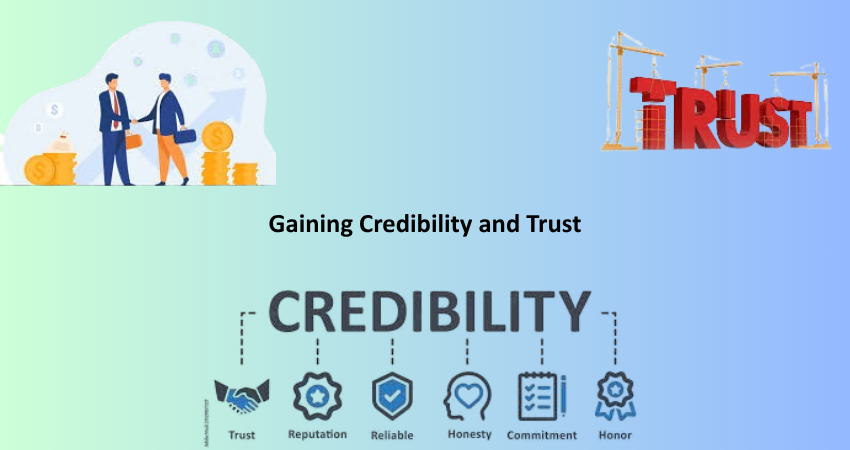
Creating a Strong Online Presence
Lacking a degree means your online presence becomes one of your most influential weapons in getting potential customers to trust you. Set about creating a professional-looking portfolio website-it need not be flashy-at least it should be able to show clearly whatever it is that you do, your abilities will contact and “About Me” section that will highlight your passion into the process that makes you unique as a teen freelancer.
Aside from your website, such platforms as Fiverr, Upwork, or Freelancer also have profile pages on them. Stay consistent with your branding-same name, profile picture, and flair across platforms. Social media can also make your online credibility reputation worthy. Instagram, Twitter, or LinkedIn share projects-rich media that show others what you are up to, depending on your niche. The more you show up online, the more real and reliable you seem to potential clients.
Asking for Testimonials and Referrals
Word of mouth is the fastest way to gain credibility for a freelancer. Starting on the right foot with testimonials and referrals is your fastest short way. Upon finishing every project-whether paid, free, or as a volunteer-assess the client or collaborator for a blurb or short testimonial of your work. Place these testimonials on your website and freelance profiles so that potential clients would see them and feel more confident in your abilities.
Never be afraid to ask your satisfied clients for the referral. A simple note such as “If you know anyone else who could use help with [your service], I would greatly appreciate it if you could pass my name along,” can certainly open some doors for you. The benefits of personal references can be just as effective as job boards, and when people feel referred to you by one of their own circle, they are more likely to give you a chance. Gradually, an emerging web of glowing reviews and referrals will make it easy to shine: even outside of a formal resume and degree.
Managing Freelancing as a Teen
Time Management and School Balance
Of course, being a teenager while freelancing can be a lot of fun and good, but having to juggle work for clients with school, homework, and extracurricular activities takes real-time management. The first step is to get a realistic schedule set. Use Google’s excellent calendars, Trello, or Notion to schedule your entire week: school, freelancing time, break times, and some hours reserved for social time. Take only as many projects as you can take without compromising your studies. – .
Communicate effectively. Inform your clients about your availability in the first place and set realistic deadlines that evaluate the load from school on your able shoulders. It is better not to promise and then deliver than to rush or miss a deadline. This sounds cynical and not personal, but time management is a skill one would continue to use not just while freelancing but throughout life. Prioritize your activities, say no at times, and save your mental and physical health by guaranteeing you sufficient hours of sleep and free time.
Setting Boundaries and Handling Clients Professionally
As a teenage freelancer, some clients may take you rather unseriously due to your age. Hence, it is very necessary to create professional boundaries and uphold a professional attitude when dealing with clients. From your very first interaction, be clear, meet deadlines, and respect the client’s time. Use contracts or agreements (even simple ones) to outline project scope, deadlines, and payment terms. These are easy to set up on tools like HelloSign or Google Docs.
If a client forces you to work over and beyond what you originally agreed upon or says your rates are high, simply remain polite but firm. Just tell them, “This is the rate I have set based on the scope of the project and my time commitment.” The umbrella of professionalism covers all. It means that, even in tight situations with clients, you lead a cool-head, solutions-oriented mind-set. However, every one of such experiences sharpens your experience for better and bigger opportunities. Time is all it takes for your confidence and communication skills to pave the way for you.
Finding and Landing Freelance Gigs
Using Freelance Platforms and Job Boards
Freelancing becomes easier for any teen-it means teenage free online jobs participate between clients and freelance websites like Fiverr, Upwork, PeoplePerHour, and Freelancer. Almost every kind of niche service is available, from writing to graphic design, coding to video editing. Making a profile-whatever it is-choose a niche that you really enjoy, and just simply describe the value of what you will give.
Start tiny. Take up a few low-level gigs-the kind everyone else wants to do but are often avoided because of the price tags attached to them-and quickly build your reputation while racking up great user reviews. Use keywords in your gig titles and descriptions for them to show up on searches. Treat the first few clients like gold-great work, professional service, and you’ll earn their automatic positive feedback, which is everything in gaining momentum. After doing a couple of projects, you can always increase your charges while attracting clients with higher budgets. The focus is on consistency, improvement, and satisfaction from your clients.
Networking Through Communities and Social Media
In a networked world, this is another great way to find freelancing gigs. Communities online like r/freelance on Reddit, Discord groups, Twitter threads, and even Facebook are full of people seeking freelancers and offering advice. Join the discussion, ask questions, showcase your work, and help out when possible. Assisting others in these communities could greatly enhance your chances of unexpectedly landing a job or two.
Social media is another means to network. If you’re a designer, show off your work on Instagram. If you’re a writer, post snippets on Twitter or Medium. Use relevant hashtags and engage with other people in your niche. Get yourself known. Most clients will go online to check the profile of potential freelancers, therefore it’s crucial to have a well-groomed, professional social persona that reflects your passion. These tools will be avenue for you to generate leads as you begin to create visibility and credibility for yourself.
Pricing, Payments and Professionalism

Setting Rates and Understanding Value
Pricing can be tough for beginners, especially for teens doing freelance work. You may be tempted to take on low-paying jobs just to get clients, but you need to balance that urge with dignity and valuing your time. Start with a bit of research on what others in your niche and skill level charge on average. Then look at how long you spend on each project while considering your expenses (such as software or tools) and your final objectives. With that information, you can think about establishing your base.
Value proposition: Don’t talk about your age or lack of a degree; talk about what you accomplish. “I can deliver a modern, mobile-responsive website that converts visitors” sounds so much better than “I’m a high school student who’s learning web design.” That last thing your clients are paying for is your degree! Start raising your rates with the improvement of your experience and skills.
Getting Paid Safely and On Time
Yet, you professionally handle payments. Use PayPal, Payoneer, or Stripe that guarantees that money reaching you is secure. Always clarify payment conditions at the start of the project—for example, 50 percent upfront and the remaining 50 percent paid upon completion. Also, consider simple invoices through tools like Wave, Bonsai, or even Google Docs.
Scams are everywhere. Refusal on a client’s part to sign an agreement, the offer to overpay, or paying upfront for something- all are ominous signs. Freelancing communities can also help you learn from others and keep abreast with the common scams. All these simple yet professional ways of handling payments will ensure that what you earn is safe and help you achieve long-term trust with your clients. You will consider escrow services to hold funds until the completion and thus guarantee both parties’ safety in their entire future.
Conclusion
Upon penning the subsequent thought, I realized that, as a teenager engaging in freelance work without formal education, the struggle had quite an uphill feeling. There is a wonderful chance of polishing ones’ skills, earning at the same time, and, most importantly, getting early experience in life. In the digital world, skills, efforts, and professionalism are miles apart from degrees. As a teenage freelancer who just starts the path to a bright career, any effort toward acquiring new skills, building a portfolio, handling the assignment professionally, and systematic networking can tip whatever chances into your favor for establishing a name for yourself.
You should never forget that what matters is never how young you are or how much you lack an official degree. What counts are your hard work, ability to learn, and provide excellent services. Just take small steps, keep working consistently, and keep getting better at it. In time, with loads of patience and persistence, you will realize that freelancing is not just a side-income; it is a platform to launch the career of your dreams, one where you are in control.