Introduction
In today digital economy, freelancers perform a major psychological role with their visual identity at the very first instance of contact, which may be an online one. A potential client might hop through your portfolio site, your Instagram feed, or your LinkedIn profile and make up their mind about how trustworthy, professional, and skillful you are in just a matter of seconds. This mental judgment isn’t arbitrary; it is based on the way our brains respond to visuals, colors, shapes, and layouts. For freelancers especially, who have no established company brand to rely on, creating a winning and psychologically magnetic visual identity is not merely an art-it is a strategic influence. By knowing how color psychology, typeface, and visual coherence affect perception, freelancers can use this to build trust and win more clients.
The concept of visual identity for freelancers includes far more than developing a logo or selecting a pretty color palette-forging instead a purposeful, clear message that resonates with your brand personality and target audience. This very nature of the discussion leads to subconscious influences-a classical realization in psychology. Thus, certain fonts can suggest more formal ideas, while others scream creativity; colors can either calm us, excite us, or spur us to act. The layout and spacing, standardly neglected design aspects, paired with visual hierarchy, can leverage the feeling: is your brand one to approach, or is it hopelessly confusing? The following article discusses the nitty-gritty of why a carefully thought-out visual identity is the freelancer’s lifeblood, why they can affect client acquisition, and with that-the perceived value in the marketplace.
The Role of First Impressions in Freelancing
How Visual Identity Impacts Perception
Embarking on the freelancing journey, your first impression would be without any words either spoken or typed. Before reading your pitch or looking into your portfolio in detail, a prospective client sees your branding-your logo, your profile picture, the layout of your website, and the style of your work samples. Psychological studies over the years have revealed that even at times, a human being makes judgments in mere seconds. These snap judgments tend to lie even after contradicted information is presented at a later moment. This even means that if your visual identity does not say otherwise or does not convey professionalism, reliability, or creativity, as befits your niche – you may lose opportunities before being able to introduce yourself.
An attractive brand that presents a consistent image across channels inspires confidence. For instance, when a freelance UX designer demonstrates her ability through a sleek and minimalist portfolio design, it translates into expectations of efficiency and clarity-those steadfast qualities of her field. And on the flip side, if your visual identity is somewhat inconsistent or not particularly on-trend, people might subconsciously question whether you are in the know about current technologies and industry standards. Therefore, visual identity is not merely a cosmetic cover; rather, it serves as a psychological aperture that results in whether people can trust you enough to give you their time, attention, and business.
The “Halo Effect” and Its Influence on Freelancers
The halo effect is a psychological phenomenon well studied, wherein one positive trait of a person influences the general evaluation of that person. In freelancing, for example, a shiny and attractive visual identity serves as a halo that somehow colors the client’s general impression of the quality of one’s work, communication, and reliability. If a client sees your sleek and modern website featuring a strong palette of color with considered typography, then there is a good chance he/she will assume that the person behind the given website is equally skillful and organized, even prior to seeing the work in question.
This shortcut gives busy clients a way to speed up the decision-making process when it comes to comparison among several candidates. All other things being equal, a designer is at an advantage if his or her branding scheme communicates visual competence. However, in competing for a bid with other professionals, it would not matter if one’s skills are equal to or even slightly less than those of the other candidate. If your presentation communicates you as a high-level professional, the chances are you would win the contract. Knowledgeable freelancers can therefore take the psychological advantage provided by the halo effect and build their visual identities accordingly to go beyond mere taste. Thereby ensuring a tremendous payoff in new opportunities, all clean and orderly with regularity.
Color Psychology in Branding
Why Color Selection Affects Emotional Response
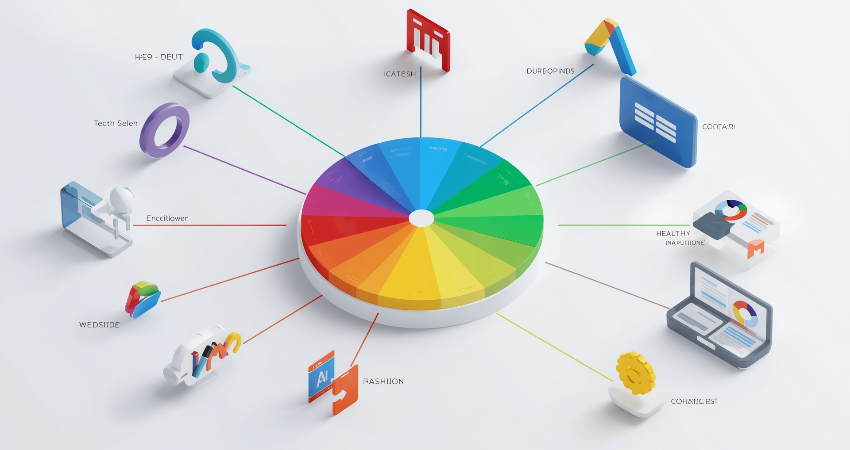
In the construction of a visual identity, color implications should not be selected in a whimsical manner, since these could engender certain emotional responses or cultural associations. Blue represents generally feelings of trust and stability and finds itself in the logos of many consultants and tech freelancers alike. The typical impression red conveys is urgency and passion, which is perhaps why many creatives choose this hue to make themselves stand out. These associations are more than decorative; they are derived from decades of psychological studies investigating the effects of color on mood, attention, and decision-making behavior.
This is possible by choosing colors that most tell the story of their promise to a brand. An independent writer who wants to express care and contemplation may use more earth-toned colors or more muted colors, while a freelance video editor whose work is published with youth-orientated brands may even opt for bright purples and neon greens. It is this consistency in color that ties the emotional tone across your website, social media, portfolio, and email signature and thus grounds audience expectation and memory with regards to your work. This psychological repetition makes your brand feel cohesive and deliberate and makes clients feel that they can trust you further in terms of your professionalism.
Cultural and Contextual Variations in Color Perception
Color psychology certainly bears strong universal patterns in its interpretation, yet cultural factors often vary quite significantly. White, for instance, typically connotes purity in the West, but in some Eastern regions, it is reserved for mourning. Then again, green may in one instance refer to environmentalism, while in another context, it may conjure notions of jealousy or financial benefits. International freelancers must find the meanings behind such colors and cultures when choosing a brand color scheme, as this applies to work across different parts of the world, or where materials are produced for translation into several languages.
The deeper context is, say, a dark red would mean incredibly powerful and bold in a fashion designer’s site, while aggressive and overwhelming on a meditation coach’s page. Learning the context of your work, as well as the emotional state of your audience, helps in making the right choice of colors to further your message instead of contradiction in meaning. Freelancers would need to make research on color psychology-the broader discussion and a focused view in relation to their industry and client base. Jettisoning your branding into the realm of psychological strategy rather than merely aesthetic appreciation liberates it into the area of cultural resonance and appropriate context.
Typography and Trustworthiness
Fonts as Silent Communicators
This is indeed a component within a visual identity which is overlooked by many-the silent and dramatic role it plays in the psychological aspect of communication. Fonts hardly serve as stylistic choices; rather, they are non-verbal cues that define the tone, personality and professionalism of the message. A handwritten script font would necessarily appear to be very personal, very warm when viewed in the portfolio of a life coach or wedding photographer. On the other hand, a clear sans-serif example like Helvetica suggests structure, clarity and modernity-for freelance web developers or tech consultants. Thus, each font includes very subtle psychological signals that would affect the way your audience perceives your professionalism and credibility.
Freelancers who create typography choices that accurately convey their brand voice subconsciously communicate professionalism and attention to detail. A bad choice or a mixed bag of font styles nudges the contrary message, giving the work an amateurish feel. And then there is the issue of readability, which runs deep in psychology. If clients ever find your portfolio or website hard to read, the frustration becomes associated with their perception of how you communicate or work. Choosing typefaces that complement the mood of your brand while also being easy to read shows that you are considerate, organized, and accessible.
Hierarchy and Visual Clarity
A well-structured hierarchy in typography, that is, in the case of headings, sub-headings, and the body text would direct the audience’s eye to the content more practically and digestively. Psychologically, we are wired to scan rather than read, mainly in the case of digital environments. Clear typographic hierarchies would allow clients to get information quickly instead of delaying their time, thus having a certain impression of your brand. Designers of their visual identities with the proper spacing, contrast, and hierarchy of sizes in fonts act naturally in guiding their audience quickly through the content, thus relieving the load on their cognition and enhancing experience.
You could compare your website or digital profile to a conversation: if the visual hierarchy is confused or cluttered, that pulls a client unwillingly into some form of awkward talk over one another or mumbling; hence they wouldn’t hear what you are trying to say. But if your typography is structured well, that would be considered speaking articulately and confidently. This clarity will subconsciously translate into perceived trustworthiness. An organized structure in typography showcases organizational talent, an attribute that is priceless for freelancers managing several clients or complicated projects. Through proper typographic hierarchy, freelancers do not just design a stunning interface; they are actually providing a psychologically reassuring brand experience.
Consistency and Brand Recall
Why Repetition Builds Memory and Recognition
Consistency acts as a building block of visual identity with long-standing psychological foundations. Habits form easily for any human being, and the process of repetitiveness forms familiarity. As a freelancer works with various colors, logos, fonts, and layouts on their website, portfolio, social media, and marketing collateral, they create a pattern that becomes recognized with time. Repeated exposure translates into brand recall—a psychological mechanism by which your audience begins remembering and trusting your brand simply because they see it consistently.
An absence of visual consistency on the part of freelancers causes a fragmentation of brand signals: potential clients may be confused, and even turned away, with the knowledge that a different profile picture appears on every platform or the color schemes of your website and portfolio do not match. The dissimilarities-no matter how slight-dilute their message. A unique visual identity described in detail in a style guide, on the contrary, helps the client to relate to your brand that much more. Its psychological power has been proven in many marketing studies: Consistency creates trust, and that is a very strategic asset to standing out as a freelancer in a competitive marketplace.
Visual Identity as a Tool for Trust-Building
Trust makes everything go around in freelance work, and a consistent visual identity is a strong tool in establishing it. When clients see branding that is harmonious across the touchpoints, they consider you reliable and detail-oriented—some of the most important qualities when clients are placing their trust in you with their projects. Visual consistency conveys the idea that you have put work into your business, which instills a sense of security and seriousness. Many a time, this psychology has been the clincher for a client becoming yours rather than a competitor drawn from the same pool of talent.
A fellow freelancer’s visual identity can even affect long-term relationships with clients. When your brand becomes known and recognizable, clients will likely remember you for future work, recommend you to others, or follow your articles. Consistent branding reaffirms an emotional bond with it in the mind of a client; thus, creating a cycle of recognition, trust, and brand loyalty. This cycle translates into visibility and repeat business for freelancers. In an industry where personal branding is everything, consistency in visual identity is not just a design teaching; it is a psychological way to advance a career.
Conclusion
For a freelancer, visual identity is not simply about a nice-looking envelope and letterhead; it is a series of psychological tools to persuade perception, build trust, and enhance memorability. Design choices [color, font, and layout] speak infinitely about who you are and how you operate-even before you say hello. In an increasingly competitive and fast-paced world, understanding the psychology behind those choices will certainly give an edge to freelancers.
Applying these principles based on visual psychology, freelancers can create identities that bring business and build confidence and loyalty in the minds of the clients. Whether you are just starting your freelance practice or working on an already established brand, paying attention to what subconscious signals your visual identity communicates might be the best investment for your freelance career ever.