
Introduction
Setting up a great online presence is no longer a rare possessor for a designer, but rather an absolute must have. In a competitive environment such as freelancing, your website is often your first interview, your portfolio presentation, your sales pitch, and your business card all together. Clients will see out for professionalism in the font you have chosen for your website, the quality of pictures, and the programming skills you have applied in deploying it in assessing your expertise and dependability. Therefore, your choice of a web-building program has implications for your freelance success. With a multitude of tools lining the current digital marketplace, the choice might feel overwhelming. With sufficient consideration, however, you can find a web builder that fits right into your interest, skill level, and design vision.
The freelance designer’s orientation is toward tools that offer the most control of the visible area with the least technical effort in incorporating necessary functionality. The best website-building tools truly help designers in expressing their creativity, free from the complex constraints of coding or “being technical.” Mass customization templates, drag-and-drop editors with responsive design, portfolio management, and offsite integration are just some of the features helpful for the client workflow. Thus, a good website builder becomes a silent partner in the communication of your vision-whether it is about illustrations, web design mock-ups, branding assignments, and product photography. In this article, we dissect the top website builders for working freelance designers, determining what makes each stand apart in the crowd.
Wix – The Creative Playground for Visual Designers
Why Wix Appeals to Freelancers Who Value Design Freedom
Wix has managed to make itself a household name reputation as probably the most flexible and designer-friendly of all website builders around. However, what really appeals to freelance designers is the drag-and-drop interface which makes pixel-perfect control possible without requiring any coding. You might want to position something exactly where you want it, break the grid as necessary, or create an impossible layout-all possible with WIX. You’re free to design a single-page showcase or a whole multi-page portfolio, as Wix allows you to have the design canvas that reflects your personality and aesthetics.
With hundreds of designer-made templates available for artists and creative professions—graphic designers, photographers, UX/UI designers, branding artists, and many more—Wix affords great creative freedom. The templates serve as starting points that can be modified and adjusted to fit your branding specifications in terms of fonts, colors, animations, and interactions. With support for advanced media management features like video background image carousels and interactive galleries, Wix is geared to serve those visual storytellers nicely. From freelance designers wanting to showcase their work to feel one of a kind, the tools and flexibility offered by Wix empower an outstanding experience.
Built-In Tools That Support Freelancers Beyond Design
Wix is not only a beautiful website but also a business tool that freelancers use to operate and grow their businesses. Built-in search engine optimization makes your website rank higher on search engines, making you easier to find for potential clients. The booking system allows freelancers to set up consultations, create design packages, and do workshops-all via their own website. Payments may be through Stripe, PayPal, and Wix Payments, which mean you may monetize what you do without worrying about managing transactions in multiple places.
What it did offer to a designer while working with the clients was the client access permission, real-time comments, and documentation where the client can view the previews safeguarded. This is what reduces the need to use tools such as Dropbox or Google Drive for sharing drafts or gathering feedback. Email marketing, blogging, and analytics are also included in the Wix advertisement for building a complete online ecosystem to run around your brand. The end result is way more than just a design tool-it’s a complete site on which to professionally and efficiently run a freelance design business.
Webflow – A Dream Builder for Designer-Developers

Webflow Combines Design Precision with Code-Level Control
Webflow remains the website builder of choice for freelance designers wanting coding power without actually coding. It merges these classic design tools, such as Adobe XD or Figma, with front-end development and gives designers a canvas to visually build production-ready websites. Contrary to other drag-and-drop platforms that hide the code from the user, Webflow spits out clean, semantic HTML, CSS, and JavaScript—an aspect that attracts freelancers who deal with clients asking for high-performance, professional-grade sites.
Unlike other tools, Webflow’s strong suit is definitely in that it has an editor interface that is designer-centric, with workflows modeled off traditional design thinking. You are in control of all the nitty-gritty details: containers, grids, padding and margins, positioning, and breakpoints. This gives ample precision in creating responsive layouts with scalable layouts with fine-tuned behavior and micro-interactions without getting typecast in fixed templates. For portfolio sites and brand websites to landing pages, Webflow opens the door to applying the freshest design mood, which delivers the impact of having been custom-built—because it actually has. Best for freelancers in high-client working environments who expect pixel-perfect execution and performance.
CMS, Hosting, and Client Handoff Features for Freelancers
Webflow is also known for its superb content management and collaboration with clients. The CMS (Content Management System) allows freelance designers to create dynamic templates for blogs, case studies, testimonials, or portfolios without backend coding. Once you define the structure, the clients or collaborators can update this content easily through Webflow Editor, which is a simplified interface designed for non-technical users. Here, Webflow is very useful when you construct the snippets of a client site that will require ongoing updates, without involving the designer in every little change of content.
By utilizing Webflow, users gain fast global hosting with built-in SSL, CDN and performance optimization-it’s already a finished service so that users will never think of configuring external servers, platforms like WordPress, etc. Freelancers can deploy their sites in one click and concentrate on design and content only. Plus, Webflow includes client billing-yes, so you can bill clients for hosting space without them interfering with designs. And if you have a requirement to transfer the site, it is pretty easy to do with Webflow’s client handoff tools to package everything professionally and structurally. Webflow is meant for freelancers who have multiple clients and need a very good workflow.
Squarespace – Aesthetic Simplicity with Business Essentials
Squarespace Offers Ready-Made Elegance for Busy Freelancers
Known for its beautiful templates and ease of use, Squarespace is a perfect accompaniment for freelance designers aiming to achieve a polished online presence without spending days on customization. The template-based design system allows Squarespace to have a short runway from the creation of an account to having a professional-looking website, yet provides the designer with considerable control over visuals, fonts, spacing, and color combinations. Each template has been fine-tuned with design principles in mind, meaning that the least amount of customization will always yield beautiful results. For freelancers who value speed and simplicity, such a streamlined approach can work as a joker.
And other reason freelance designers love Squarespace: a responsive design system. Every template is optimized for mobile right out of the box, so you don’t have to spend time creating a separate mobile version or manually changing breakpoints. The platform also supports full-bleed images, parallax scrolling, and some soft animations, which can give your site that level of refinement without having to load it with plugins or third-party scripts. From showcasing a portfolio to sharing the workings of one’s design mind to selling design services, Squarespace assures that your site will always look amazing, no matter what device and screen size is being used.
Built-In Features for Managing Freelance Design Businesses
But aesthetics, Squarespace offers a strong range of business tools for freelancers. It can integrate appointment scheduling through Squarespace Scheduling, set up e-commerce to sell templates or design assets, and even build members-only content for paying clients or subscribers. In all, Squarespace is compelling as an all-in-one for freelancers who want to show their work but also monetize it. The same goes for designers who do workshops and offer digital products or build membership.
Squarespace comes with solid email marketing tools, SEO features, social integrations, and analytics dashboards to allow the freelancer a comprehensive management of the web presence, all from one platform. There is no need to juggle all these tiny tasks with third-party tools. Specifically, Squarespace analytics allow freelancers to understand how visitors interact with their site, what pages generate the most hits, and which content converts a visitor into a lead. This information can thus be used for future modifications to the site. For the designer who is likely to do many jobs as an artist, marketer, and entrepreneur, Squarespace is a reliable and artsy platform that delivers.
Shopify – For Designers Selling Products and Services
Shopify Is Ideal for Freelancers with E-Commerce Needs
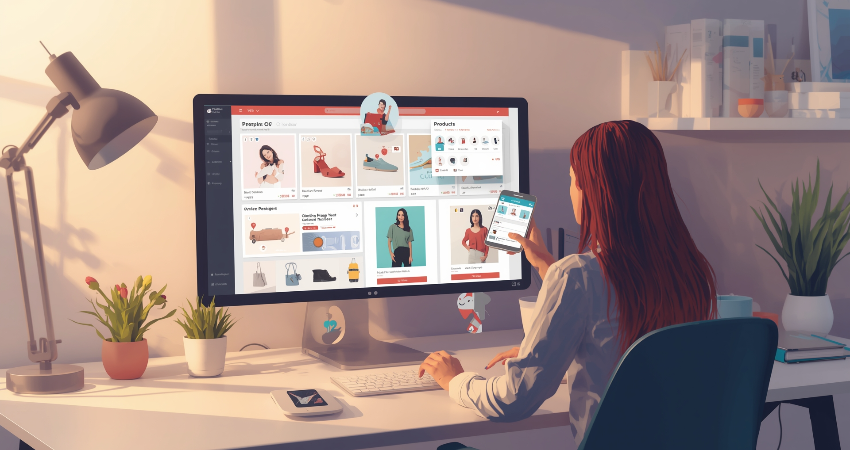
Shopify is known well as an e-commerce platform, but it also doubles up as a strong independent website builder for freelance designers, who wish to sell digital or physical products, or say branding packages, fonts, icon packs, illustrations, or even print-on-demand mercantile. It brings a clean content management interface along with all the powerful strength of a complete e-commerce solution-the whole administrative side of product listing, payment collection, shipment facilitation, and customer communication-all from one place-for freelancers. Everything needed to create, launch, and scale an online store is what Shopify has to offer for creative persons who would want to turn the designs into a passive stream of income.
Customization capabilities through its phenomenal theme editor and Liquid templating language are certainly the hallmark of Shopify. While coding knowledge undoubtedly improves your capacity to customize themes, several of the newer templates available today on Shopify are so flexible that they can be customized without any code whatsoever. Freelancers can set up a fully decorated storefront using themes designed to highlight product images, branding stories, and testimonials. With just a few clicks, marketers can now integrate the likes of marketing tools, email automation, upsell features, and customer reviews from the Shopify App Store-giving the store a feel of enterprise-grade without ever needing the intervention of a developer.
Supporting Freelance Designers with Scalable Tools
The features of e-commerce aside, Shopify really creates an arena in which freelance designers can run every aspect of their design-based business. If you provide design services in addition to products, you can create service landing pages and even set up custom forms or booking interfaces via third-party integrations. The platform incorporates a built-in blog, SEO-friendly tools, and customer outreach programs via newsletters and contact forms. Marketers offering the hybrid service of both selling things and actual service works would find that Shopify is a robust and very flexible foundation on which to grow.
Add to that Shopify’s own payment processing and mobile optimization, and you now have all the tools to offer a frictionless solicitation experience for your clients or fans. When you’re planning to grow your freelance business into a full-fledged design name, Shopify grows with you. It also allows for multichannel selling, integrating your store with Instagram, Facebook, and TikTok, great for marketing with visuals. From freelance designers that want more than just a portfolio, Shopify provides everything they need to build a fully fledged creative enterprise.
Conclusion
Choosing the right website builder has long-term implications for a freelance designer. It’s not just about a nice-looking site; it’s a tool for an entire creative process- showcase the best work, win new clients, generate income, etc. Depending on whether you want freedom of design, coding capabilities, business integrations, e-commerce options, etc., a builder according to your needs exists.
Wix gives visual freedom and an enriching experience for one’s creativity. Webflow is to design professional websites with clean code and client-approve workflows. Squarespace provides a perfect combination of elegance and business tools in an easy-to-use package. Shopify is about making your design business a revenue-generating brand with e-commerce muscle. Align the strengths of each platform with your goals, and you should be establishing yourself for repeated success as a freelance designer in the digital world.