Introduction: Setting the Stage for Freelance Success
Freelancing in web designing talks about one of the most rewarding and liberating careers. However, with the current boom in remote jobs and digital presence, it has more opportunities than ever for web designers to run their businesses and interact with their clients across the globe. But before stepping into the freelancing world, one has to say that freedom comes with many challenges. Full of unrealistic expectations, strategies not well-rehearsed, and then bereft of adequate preparations enter freelancing many designers end up falling prey to common pitfalls with a bit more foresight having been so easy to avoid.
This article explores the most popular and heavy-laden mistakes aspiring freelance web designers make. If you recognize such blunders and learn how to avoid them from the start, you will find your way through the maze of freelancing with more confidence. Most of the pitfalls for even great designers stem from mistake in pricing, issues concerning units of branding, poor communication habits, and hollow business infrastructure. Thus whether you are a seasoned designer who has ventured into self-employment or a rookie starting out in your freelance career, this guide will turn out to be useful for you to sidetrack those pitfalls that cause derailment in most freelance careers even before they commence.
Undervaluing Your Work
Setting Unsustainable Prices
Indeed, one of the most serious blunders that novice freelance web designers usually commit is the issue of pricing their services too low. Most of them, driven by the fear of losing prospective clients, significantly reduce their rates below the typical rates in the industry. While the lower pricing may attract a lot of work in the short term, it eventually comes to create long-term problems. This minor rates make it difficult for a freelance career to be sustained financially, as well as belittles one as a professional in front of clients. Clients associate price with quality, and undercharging may imply to them that you have not even started out or are not confident about your own work.
Thus, working for less than you deserve sets a precedent very difficult to reverse. If you start out charging dirt cheap rates and agree to something higher down the line, more often than not you face some friction or loss of clients. All this can be avoided by researching market rates for your skill level and geographical area. Include your expenses, taxes, time spent, and desired profit margin before finally coming up with your prices. Use anything from rate calculators or sites like Bonsai and Glassdoor in finding a sustainable hourly or project-based rate. Obviously, your work is not just scaling code or designing pages-it’s solving problems for businesses through creative means. Price your services to reflect the value you bring to the table.
Ignoring Scope and Time Estimates
Poor scope definition and unrealistic time estimating are yet another angle from which to view the undervaluation of a freelancer’s work. Many professionals fall prey to quoting flat rates without itemizing their scope properly. “Just a few small changes,” a client might say. But suddenly, days of unforeseen work (and pay) are non-existent in the freelancer’s plan. Unless one can control scope strictly, one repeatedly ends up working overtime, which causes unwanted stress, bitterness, and ultimately a poor-quality execution.
You can avoid this by having every project detail clearly laid out in a proposal or a contract, with set timelines, deliverables, and limits on revisions from day one. Scope creep is a silent killer in freelancing, and it’s best to recognize it and set boundaries. Divide projects into milestones, assign realistic time estimates to each, and keep clear communication with clients about what is included and what is not. Don’t forget to include buffer time for unforeseen last-minute revisions or delays. Learning to master project scoping and time estimation upfront will protect your time, your income, and your peace of mind.
Failing to Define a Niche or Brand

Trying to Be Everything to Everyone
All these things are misjudged by the new freelance web designers: they cast a wide net to catch more clients. Now it seems wiser, but rather, this dilutes your brand and complicates how potential clients perceive what you do best. Without any real niches or value proposition, the portfolio ends up looking generic, which can drive clients straight toward more specialized competitors.
Niche Definition Clarifies That Your Market Is Not Limited by Niche Definition but rather Just Puts All Your Energies on Affording Most Value and Differentiating Yourself in Niche Areas Where You Can Be the Best. Some excellent niches would possibly be web design for coaches or restaurants, startups, SaaS brands, and eCommerce. They require all specialized design styles and functionalities that you can become an expert in. You can command very high rates in such a case and develop your reputation as subject matter expert quite quickly. It also explains the issue of trust and makes it easier to draw and convert ideal clients-by customizing the case studies and services and messaging.
Overlooking Personal Branding
Another untapped opportunity comes in the lack of good personal branding. Freelancing is a very competitive business, and many times, clients decide upon a designer not just for his or her skill set, but for personality, professionalism, and trustworthiness. Your personal brand is what distinguishes you from the hundreds of designers out there offering essentially the same services. This includes the tone of your voice, visual identity, mission, values, and above all, how you present those aspects of yourself online—primarily on your portfolio website and social personas.
Start developing your powerful personal brand by identifying your unique selling point and communicating it across your website, social media profiles, and other communications. Invest in a professionally-made logo, write a clear and genuine bio, and put your testimonials or examples of client results front and center. View the brand as the packaging of your service; it is the first impression its prospects have of you and often decides whether or not they would proceed to the next stage. If successfully executed, your personal brand will attract your ideal clients and lay the groundwork for long-term prosperity as a freelancer.
Skipping Contracts and Documentation
Working Without a Contract
Working without a contract is one of the most foolish things a freelance web designer could do. Even if it may seem unnecessary, particularly with friends or casual referrals, without a written document, miscommunications, scope creep, payment disputes, and litigation may occur. A contract protects both sides by detailing expectations, responsibilities, timelines, deliverables, and payment terms, and what will follow if any of these are delayed, cancelled, or disputed.
Trusting your client really isn’t a reason to forego a contract. In fact, insist on one. Many online resources and templates, such as Bonsai, Hello Bonsai, or AND.CO, allow you to create tailored professional contracts for creative work. Contracts also serve as a point of reference to settle any dispute amicably, thereby not burning any bridges. If it doesn’t work out and there’s no contract, it becomes your word against the client’s—and that’s a risk not worth taking. Right from the very beginning, treat your freelance work like a business and make contracts a must-have in your professional workflow.
Failing to Document Revisions and Agreements
It has to be one of the most foolish whims of any freelance web designer to work without a contract. It may seem trivial, especially with friends or about casual referrals. Without this written document, however, miscommunication might arise, scope creep may follow, payment disputes may occur, or even litigation may ensue. A contract is there for the protection of both parties by setting forth the expectations, responsibilities, timelines, deliverables, and payment terms of the engagement, as well as what will happen should any of these be delayed, cancelled, or disputed.
A contractual agreement is not to be omitted in glimmering personal trust upon the client; maybe you should push for one. Internet sites like Bonsai, Hello Bonsai, or AND.CO provide customizable contracts, templates, and programs for creative work. These contracts serve as a point of reference allowing for an amicable settlement out of court. Otherwise, if disputes arise without a contract, it plainly becomes your word against that of the client. Therefore, this is a chance not worth taking. From the very first day of your freelancing career, treat it like a business in which contracts become a pro forma document within your professional workflow.
Poor Client Communication
Lack of Clarity and Consistency
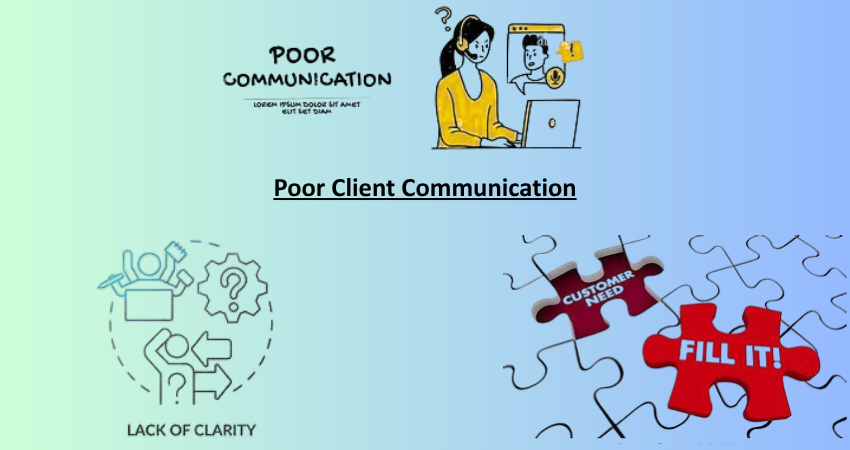
In a true sense, client communication can make or break your freelance relationship. The very initial freelance newbies considered that being a good designer would make it sufficient. However, it is not that easy as clients would still expect clear updates, timely responses, and transparency in the entire process. Without that, most likely, clients can be confused and frustrated or lose faith in your ability to deliver the desired project. Consequently, this means excessive numbers of cross-inquiries, scope-creeping, or, worse, losing the project entirely.
This would mean clear communication expectations from the very beginning. Inform your clients about the times and means of reaching you, the types of updates to expect, and when key deliverables would be submitted. Use tools like Slack, email, or a client portal to keep things organized. A weekly progress update, no matter how brief, would help reassure clients that things are going well. The more consistent and structured your communication, the more professional and trustworthy you appear—and hold the potential to build long-lasting relationships with clients.
Not Listening to the Client’s Needs
Another great fault in communication is not really listening to the client. All too often, designers feel they know what is best regardless of whether or not they have learned about the business goals, target audience, or brand voice the client wishes the new design to reflect. This disconnect leaves designs looking good but performing poorly. Clients may sign off on your work out of courtesy or resignation but will not come back-or send another customer your way-if their business needs were not satisfied.
To discover the client through effective means, asking good questions is the starting point. Among others, while onboarding, ask what success will look like for the client, what would be the barriers to that success, and what the site should be successful in achieving. Use design briefs or questionnaires to gather more comprehensive information before starting the design process. At every point in the project, continue to underscore design decisions and their backing by client goals. Clients are likely to be more attuned to the end product when they feel heard and better understood.
Neglecting Business Infrastructure
No Plan for Lead Generation
freelancers, however, never understand the importance of having a steady flow of prospective clients. Natural referrals bring in a few projects early in the life of a freelance career, but that does not mean one could sustain oneself without making any efforts to see marketing and lead generation as something a freelancer would have to do. It is not a real business that requires continuous advertising, but freelance work is not something you can call a gig.
Client acquisition is perhaps most integral to successful freelance freelancers’ work processes, ranging from SEO optimizing your portfolio site through networking on LinkedIn or, indeed, blog post writing, sharing your work on, say, Behance or Dribbble, and of course, ad buy when it’s within budget. No one should be-the expert sage in just about anything; however, you will always sell your service. Just set a little time weekly aside to reach such leads, update your website or engage in your network. An effective lead generation will send you not into a frenzy when at times there will be a project with a long gap between finish and starting human contact with others. Regularly engage with upcoming opportunities by reaching out to leads, updating your website, or communicating within your network.
Lack of Financial Planning and Tools
Too often freelancers jump into freelancing without creating the right infrastructure to handle the financial affairs of a business: tracking income and expenses, saving money for taxes, and managing invoicing and payments. These all-too-frequent problems for freelancers are having cash flow issues, chasing late payments, and suffering through tax season.
Invest time, like QuickBooks, FreshBooks, or Wave in properly managing finances. Set up a separate bank account for completing personal and business transactions. Most importantly, buffer savings to tide over slow or emergency times. Just as you plan a design project, apply the same prudence to your business. This professional discipline not only safeguards one’s livelihood but also infuses the freelancer with greater confidence and control of future events.
Conclusion: Build Smart, Grow Strong
It feels as though this place changes every day: megacities within megacities. Freelance web design work could also offer you all these ideals-freedom, flexibility, and control over the creative process, but only if it is well-founded. Avoid all the major pitfalls, and it will save you a few months of hard work, loss of income, and wear and tear on the nerves. Specify your niche, price your work correctly, document everything, communicate like a pro, and put everything in place for business systems.
Now remember, you cannot just survive on design; you also have to push your entire freelance operation with a business owner mindset. Start well, stay consistent, and keep learning-and a profitable career will only bring you fulfillment.