
Introduction
Your portfolio if a tool that can help you most in that whirlwind environment of freelancing and digital careers. The absolute first communication most often hears about potential clients, hiring managers, or collaborators is your portfolio, which registers work, skill, and creativity. 2025 has gotten the most fierce and grueling competition amongst freelancers and digital professionals, so it is crucial that a portfolio be polished and purposeful; too often, though, young freelancers and web developers just stuff their portfolios with everything they have ever worked on, from the relevant and highest-quality works to things that don’t approach their goals. Clutter may not only be confused with what is and is not in the portfolio, but it also serves to detract from and dilute your professional brand from the strongest work.
Clutter-clearing is more than tidying up or decluttering; it is being purposeful, calculated, and selective. A clean and organized portfolio is effective rather than overloading potential clients with unnecessary information. It shows only the most pertinent and impressive work related to his expertise, tells a simple story about how he can help the clients achieve their goals, and facilitates understanding in the viewers’ minds as to why he is the best person to do their project. This article discusses the importance of decluttering, how clutter interferes with your opportunities to work, and some useful strategies to declutter and streamline your portfolio and present yourself for success in 2025.
Why Clutter Hurts Your Portfolio
The Problem of Overwhelming Potential Clients
Their original wordings have assuredly made it dramatic and dramatic, but maybe too cluttered. One of the major problems of clutter being harmful is that it overwhelms potential clients or employers. Open a portfolio to see 30 different projects across the years; many are outdated, irrelevant, or just plain redundant. People are not going to be impressed; they’re going to just be confused, left wondering about where you stand in terms of your skills, or what ultimately they can expect regarding what type of work you will do. This is how a typical portfolio lacks focus. Decision makers cannot quickly identify your strengths and suitability for their organization.
From the viewpoint of psychology, clutter causes cognitive overload. Human attention is limited. If (too) much is thrown at a viewer, he is less likely to engage and more likely to turn away because it would require more energy to sift through the noise. Click away instead of recognizing your great projects. In 2025, a hiring manager or client will often see dozens of portfolios; hence, there’s no room for carelessness in this regard.
The Risk of Outdated or Irrelevant Work
Additionally, cluttered portfolios sometimes lag behind with too many old or irrelevant work projects. If your work is old and was done years ago, then it probably doesn’t mirror the skills you possess now, especially with something that is changing as fast as web development or UX design, or even digital marketing. Similarly, if you do work that is outside your target niche, a client may well be confused as to just what you offer. For example, if an e-commerce web design client is what you want to go after, old school projects show in your portfolio instead of any specific graphics on that, and your message is diluted.
Of course, the addition of old projects can also cast doubt on your professionalism. If the best things you can show came from years ago, clients might begin to wonder if you are really keeping up with the ever-increasing changes in trends and technologies. Similarly, clutter could very well hide the most significant areas of your portfolio under the less important projects. Therefore, by removing everything that does not serve your goals, you make it easier for viewers to concentrate on the best and really serve the purpose in showcasing the sound projects that best articulate your skills today.
Identifying Portfolio Clutter

Recognizing What Doesn’t Belong
Decluttering starts with discovering what clutter really is. Portfolio clutter can emerge in many facets: old projects, irrelevant samples, too many versions of similar work, or anything else that does not communicate your career direction. One can actually consider overuse of text, distracting graphics, and disorganized layouts as clutter as well. The whole idea is to try and see your portfolio through the eyes of your ideal client or employer: what would be their points of interest and what might distract them?
This is often difficult for developers and freelancers since they usually have an emotional connection to their early works. However, separating nostalgia from strategy is essential. A great project may no longer benefit your professional image, and showing versatility by including “everything you’ve done” could backfire if it dilutes your message. Once clutter can be identified more objectively, the real focus begins to take shape in the direction of a more practical and effective portfolio.
Setting Clear Goals for Your Portfolio
The very next thing is to define the purpose of your portfolio once you know what not to include. A compelling portfolio should not be a random bag of projects; rather, it is a carefully assembled collection designed specifically to achieve certain ends. Ask yourself: Who would I like to view my portfolio? Am I trying to attract freelance clients, full-time job offers, or gain recognition as an expert in some niche area? Each goal therefore is likely to require a different methodology.
A freelance web developer may wish to display projects that demonstrate client results and scalability and use modern frameworks. A UI/UX designer may wish to emphasize feasibility studies and design systems. The clear definition of your objectives works as a filter for accepting and rejecting projects. Any project or component that detracts from your mission becomes clutter. That same clarity will ease the process of decluttering while ensuring that your portfolio conveys the right message.
Streamlining Your Showcase
Curating Your Best Work
A decluttered portfolio really doesn’t mean that you should create the thinnest of portfolios, but towards it getting thinner, fine-tuning the most justifiable specimens of itself with its best and most suitable works. An entry that showcases four or five viable and well-assembled works is way more impactful than one with twenty mediocre samples. For most full stack developers or freelancers, the primary challenge would lie in deciding what projects to include. A good rule of thumb: Projects that best showcase your ability to solve real-world problems, in line with the type of work you would prefer to attract in 2025.
When choosing projects, consider variety without redundancy. When you have several projects that demonstrate the same skill, choose one that has either the most impact or involves most of your polishing. Include several types of projects in your portfolio that show strength in different areas, but try not to show so many that the audience can’t see a particular niche. Case studies could also lend considerable heft because they demonstrate not just what you’ve built, but why you built it, the challenges you faced, and the results of your effort. Thus, everything becomes more storytelling and memorable.
Presenting Projects with Clarity
Choose the best work samples in making the next decisions on clarity and professionalism. A cluttered presentation can subvert even strong projects. Every project should be described concisely in terms of objectives, user role, technologies utilized, and results achieved. Avoid long walls of text in favor of rather structured, scannable sections that allow the viewer to quickly absorb key information.F Additional images such as screenshots, interactive prototypes, and even short demo videos can add a visual flair when used with discretion and not to excess.
The arrangement of your portfolio should be such that it makes navigation very simple and intuitive. Categories or filters help viewers find what is most relevant to them. Make sure your best works are highlighted right at the front since most clients or recruiters will not delve very deep into your portfolio. Keep in mind that portfolios take only seconds to judge, so clarity and focus become indispensable. This ensures that an uncluttered content and presentation of your work leave a glowing impression.
Designing for 2025 Standards
Emphasizing Modern Design Principles
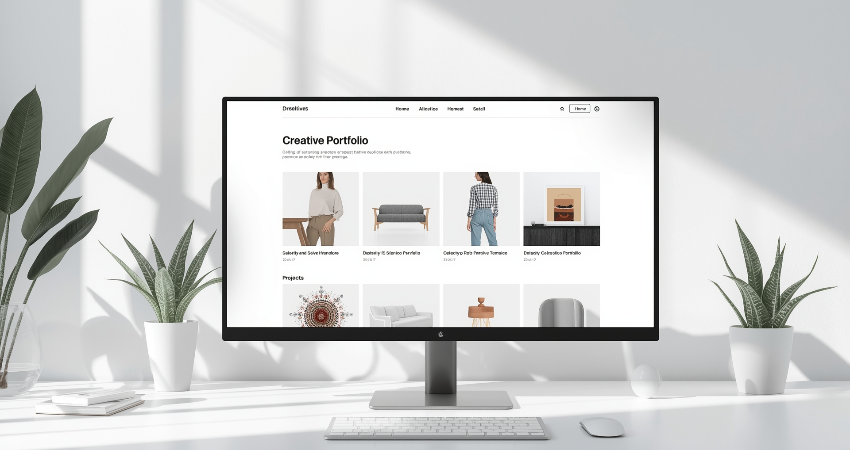
Indeed, as we witness rapid declines in design trends and the changing expectations of the user in the recent past, the standards of portfolios in the year 2025 will be set higher than ever. Bachelor’s designs do not only distract but are associated with outdated skill sets. Minimalism, clean layout and strategic use of whitespace are some of the key trends dictating the new professional portfolios. Clients and employers have generally become accustomed to sleek, mobile-responsive designs that load quickly and are heavy on usability. A cluttered outdated portfolio would give room for doubt in the client’s mind concerning your ability as a designer or developer.
To really make a portfolio minimal, apply modern design principles to the portfolio itself. Use typography consistently, align content properly, and avoid excessive visual noise. Let the projects speak for themselves by keeping unobtrusive but professional design. Interactive elements like hover effects or animations should be subtle not overwhelming. Above all else, ensure accessibility; use sufficient color contrast, give text alternatives to images, navigation should be seamless on both desktop and mobile. Such a portfolio displays aware of design and usability; instantly establishes trust.
Leveraging Technology for Better Performance
The role of technology has now demanded major attention in uncluttering of 2025 portfolios. When performance metrics like Google’s Core Web Vitals affect search visibility and user experience, one may leave optimization to the wind concerning his/her portfolio. Portfolios that are heavy with unoptimized images, bloated scripts, and unnecessary effects will simply load slowly. This slow experience will test a potential client’s willpower to keep going. In contrast, a clean and fast-loading portfolio tells the world about professionalism and technical skills.
In conjunction with previously mentioned practices, lazy loading, responsive images, and code splitting rank among the top methods of enhancing performance. Deployment and optimization are easy on modern platforms such as Vercel or Netlify. Developers may integrate their analytics to analyze visitors’ interactions with their portfolios for insight into improving presentation or taking away whatever is seen as distracting. Showcasing modern aesthetics with optimized performance gives a handsome portfolio that can actually demonstrate your technical prowess-a vital sign for clients in 2025.
Maintaining a Clutter-Free Portfolio
Regular Reviews and Updates
Cleaning up the clutter does not end with a single event; it has to be maintained regularly. The kind of a portfolio that dazzles the viewer today can easily become an outdated quagmire by the following year if not timely updated. Developers and freelancers must commit to the periodic review of their portfolios by adding new works and removing those no longer relevant to their objectives. Your portfolio is essentially an extension of yourself; it evolves and changes with the progress or development of your career, thus ensuring that it reflects your present skills and career aspirations.
Regular updates must demonstrate to possible clients or employers that you are active and involved in the field. On the contrary, an outdated portfolio might communicate that you have not been active in the field and have not moved with the times. Having a set time frame every year, such as quarterly portfolio reviews, aids in making sure that you give good consideration to keeping it uncluttered. By maintaining and updating your portfolio, you continue to nurture a professional presence unlike others who might lag behind.
Building a System for Long-Term Success
You have been trained from data up to October 2023. Keeping clutter at bay in a portfolio calls for maintaining systems applied for projects and updating. Keep private archives of all of your works but be selective of what goes into the public portfolio. Set up folders, spreadsheets, and project management software to oversee potential portfolio items as far as relevance and upgrading. Doing this will allow you to swap projects in and out as your career moves on without muddying the viewer’s waters.
Maintenance will become easier when some processes are set in place. For instance, feeding the portfolio with updates from GitHub or Dribbble would ensure the continual upkeep of the portfolio, but the curator still possesses the power to discard certain items.Insofar as you can associate criteria with the qualities of work that you would hold to portfolio standards, then that would warrant being used that much easier. Such systems not only help with the present clutter they will also come in handy in making the portfolio less cluttered, sharper, and more potent in the years to come.
Conclusion
In 2025, freelancing and digital careers in combination with strategy and creativity require more than technical prowess. A cluttered portfolio may impress a client at first sight, but it often does the opposite-inundates him or her with work irrelevant to the job at hand, projects completed years ago, or work signaling out-of-date skills. It sharpens the message, displays impressive signature projects, and constructs a professional image for attracting opportunities by cutting clutters.
It is also identifying clutter, setting clear objectives, curating your best work, and displaying that work with modern design and performance standards. Regular updates and systems maintain this clarity and thus ensure that your portfolio is relevant and impactful over time. Not only does this begin to make the cut from a physical standpoint, as the competition grows, but it is also increasingly difficult to grab a person’s attention, and first impressions will never count more than now.