Introduction
Color is not only the designer’s wish; it is a psychological practice that creates the perception people associate in interacting with a brand. Freelancers in design, marketing, writing, or consulting seriously underestimate this concept when branding. Yet research after research back up the notion that color instigates emotion and sounds a decision-making process in one’s memory when mentally calling up anything: A personal website, portfolio, or social media profile sends color signals about your professionalism, creativity, and reliability to that person on a subconscious level. By disregarding any of these cues, you lose a chance or two to get closer to a prospective client’s heart.
Branding, for freelancers, is a personal endeavor. While large corporations may have many faces, you are your brand. Hence color psychology becomes even more important, as it conveys not only your professional identity but also conveys a message about your personality at a glance. The wrong colors suggest that your brand is inconsistent or even untrustworthy, while the right colors evoke confidence, trust, and engagement. Freelancers can use their knowledge of how colors affect perceptions to accentuate their brand visuals in a way that connects with their target audience, successfully distinguish themselves from competitors, and create a favorable long-term impression. This article will take a look at the importance of color psychology for freelancers and offer guidance on color selection and applications for sustainability in their careers.
The Science Behind Color Psychology
How Colors Influence Emotions and Decisions
Colors exercise direct influence on the human mind. People see colors, and then the brain translates the picture into the emotional state as well. For instance, warm colors like red and orange reflect energy, urgency, or passion, while cooler tones, such as blue and green, tend to reflect calmness, trust, and balance. This is not theoretical but empirical and has the backing of countless psychological studies. This, for freelancers, means that the palette you choose for your portfolio, logo, or for social media banners is going to trigger the emotions aligned with or clashed with the service you provide. Colors that communicate trust and stability may enhance appeal if your work is detail-oriented and professional. If your work is creative and vibrant, then the bright shades may represent that identity better.
Emotion is not the only thing that colors influence in relation to the decisions of an individual. Studies in consumer psychology reveal that up to 90 percent of snap judgments would be made concerning products or services based on color alone. This means that, before a potential client can read about your skills or view your portfolio, your colors could determine whether they will carry on with you. Since everyone knows that the first impression is all one sometimes has to rely on to win a client, this makes color psychology not just a matter of aesthetics for freelancers; it is strategy. The better you understand how colors affect emotions and behavior, the more deliberate you can be in creating your brand identity.
Why Freelancers Should Care About the Psychology of Color
Different from large corporations, freelancers often do not have hefty budgets for advertising or marketing. Thus, visual branding-including colors-becomes even more important as a tool to quickly and effectively convey professionalism. Clients judge how polished and cohesive a brand looks and, as such, a freelancer’s credibility depends mostly on how well they have branded themselves. Choices of color play a major part in helping, as they tend to give an indication of professionalism without high-cost campaigns. On the contrary, poorly chosen or inconsistent colors may signal that your brand is disorganized, immature, or just inexperienced for reasons that persist with the sharpest skills.
Freelancers also work for most part in competitive spaces where differentiation becomes important. If dozens of designers, writers, or developers pitched their services for a particular client, subtle cues like color psychology could tip the scales. Well-designed palettes would not only ensure the memorability of a given portfolio but could also serve as a distinguishing factor in the wide expanse of online platforms, creating a trust-filled brand identity. Color psychology thus provides freelancers with research-improved access to tools that enhance deeper relationships with their public and enhance their chances of outwitting competition.
Choosing the Right Colors for Your Freelance Brand
Understanding Color Associations
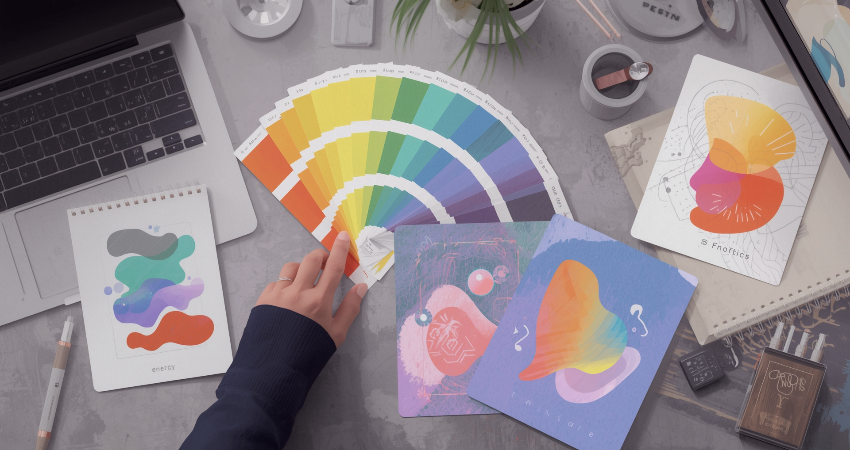
Your brand is perceived based on the associations it generates through its color. For instance, blue is associated with trust, stability, and reliability, which is why blue is the color of choice in many businesses, especially in finance and technology. A freelance consultant or developer may want to consider this color as a way of communicating credibility. Culturally, it has a specific connotation in interpreting one’s perception; for example, it puts to use associated colors to work with green in growth, balance, and sustainability, especially favored by freelance workers in wellness, coaching, and green enterprises. Red should apply in evoking excitement, urgency, and passion, targeting creative freelancers wishing to communicate the very sense of energy and boldness.
Freelancers, however, must become aware that cultural coloring brings about some variations in that perception. For instance, while in Western culture, white stands for purity and simplicity, in other Asian cultures, it stands for mourning. Such subtleties might help you avoid unintentionally putting forth negative associations if selling to an international clientele. When you try to study how colors are received in the context of your target audience, you can then choose those colors consistent with your brand’s values and eliminate colors that might send accidental negative messages.
Building a Color Palette That Reflects Your Identity
When building a strong freelance brand, one cannot rely on a single color but on a color palette. A palette will include a primary color that best represents the brand’s heart; secondary colors as accents to the primary should never outshine it; and neutral tones to soften any extremes. So, for example, say a freelance graphic designer uses a solid yellow to signify creativity against grey and white, giving a sense of professionalism. In contrast, a freelance copywriter would rather go for something more subdued like blues and greens suggestive of clarity and trustworthiness.
The secret of building your palette is in consistency—all colors you choose for your brand should be interspersed in different touchpoints; the website, portfolio, business cards, and social media profiles- as a way to cultivate one firm identity. Keeping consistency in color as a freelancer gives easy recognition, which is imperative to being heard in a hazy market. This is a sure-fire way to make sure that when potential clients see your work, they associate those visuals with your brand, which adds to your credibility and trustworthiness.
Applying Color Psychology in Branding
Designing Your Logo and Portfolio
These items will be the first branded artifacts that potential clients may come across: Your logo and portfolio. A well-thought-out logo with color may say a lot about your brand personality in seconds. For instance, if you are a freelance web developer who deals with secure, reliable systems, the blue color tones in your logo may increase the credibility. But if you are a freelance illustrator who draws on energy and has fun, then a purple or bright pink color will represent what is unique about you. The only rule is that the color of the logo must reflect the emotion you want to spark.
Where you app your color in your portfolio will be to direct attention and highlight your best work. Bright accents in small doses will draw attention to a call-to-action button or feature a project while keeping most of the portfolio neutral so as not to distract the viewer. A clever mix of bold and neutral colors should be used by a freelancer to make an appealing and navigable portfolio. Your portfolio does not only showcase your skills but also part of what runs through the whole identity of your brand, and color is definitely key in this message.
Using Color Across Digital Platforms
Freelancers have to connect with clients on digital platforms like LinkedIn, Upwork, Fiverr, or on their personal website. When the same color psychology is applied to all of these platforms, it enhances feeling of familiarity and builds the brand. For instance, using the same set of brand colors on a LinkedIn banner, website header, and portfolio creates consistency which allows the client to associate that experience instantly. Such a strong consistency speaks professionalism and makes the brand easier to remember.
Colors can also affect usability and interaction on digital platforms. Research suggests that it is really the color of the buttons that can affect click rates, with high-contrast colors being more successful. Freelancers who pay attention to such details will enhance client interaction on their websites and profiles. By using color psychology with discretion on various digital platforms, freelancers can draw clients’ attention and motivate them to take desired actions, whether that means booking a consultation or further exploring their portfolio.
Avoiding Common Mistakes with Color Psychology
Overloading Your Brand with Too Many Colors
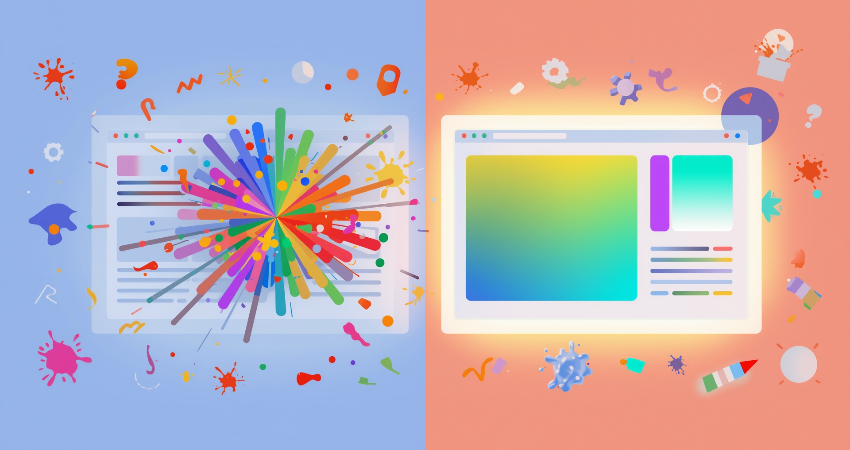
Unfortunately, freelancers fall into the habit of using too many prints and colors in their branding. Although it seems very alluring to show off difference and options, a sudden overload usually translates into confusing visual clutter. Instead of putting a creative and dynamic front to your brand, too much color can make it unprofessional and unfocused. Clients will find it difficult to see the essence of your message-the way it is looked will definitely weaken your credibility.
Restraint is, however, the key to avoiding this pitfall. Restrict the palette for your brand to, say, a scant few selected colors that will represent its different aspects. More often than not, that means just one dominant color, one or two interacts, and neutral shades for balance. By these three economies in using colors, you generate such a strong brand identity that is recognizable and easy to memorize by your clients. That will even be more easily kept in consistency across a few touchpoints of reduced colors, thus equally favoring professionalism and trustworthiness.
Ignoring Accessibility and Readability
Another major mistake most freelancers make is ignoring the factor of accessibility during an aspect of selecting colors. Some color combinations can result in readability problems, especially among users having visual impairments higher up, such as color blindness. For instance, placing text in red on a green background may seem to be extremely bright but may be impossible to identify for many. This not just restricts the effectiveness of your brand but could even deny some of your potential clients the opportunity of interacting with your materials.
Accessibility becomes a challenge for a freelancer because all color combinations need to be tested for visibility and contrast. Color contrast checker tools provided by WebAIM will ensure that your palette is accessible. By doing so, one broadens the possible audience for their materials while also showing that the standards of inclusivity and attention to detail are things that are valued from the very beginning of establishing themselves in the freelance market. This trait can very well differentiate one in the competitive freelance market and add to one’s reputation as a considerate, professional brand.
Conclusion
Color psychology is more than an aesthetic factor; rather, it is a technique that freelancers use to shape perceptions, influence decisions, and nurture their relationships with clients. If freelancers did their research on these associations and emotions made by different colors, the conscious decisions they take from thereon will include one that properly resonates with the profession and audience. From here, a fitting palette taken straight across the board boosts credibility, memorability, and trust. In an absolutely opposite fashion (this is a mistake), the colors could be too overwhelming or totally inaccessible, and this would damage one’s project more than most.
For freelancers, branding is one academic profit. Each visual decision you make reinforces a story about who you are, what you offer, and why clients can trust you. With color psychology, you can make sure your brand immediately communicates the right story, helping you to stand out in a cluttered marketplace and forge lasting relationships with clients. Understanding and applying color psychology is not just about design; it is about empowering your freelance brand to engage, persuade, and flourish.