
Introduction
Having an online presence is a must in this fast-paced digital world, especially for freelance web designers. Truly, in their essence, portfolio websites are much more than just a digital business card; they prove to be sales tools, client magnet installations, and, most importantly, ambassadors for a freelancer’s brand. Where the freelance web design site is done right, clients from the high-quality pool can be drawn in, designs showcased, and contracts signed much more quickly. Far too many designers treat their sites as static art galleries and forget that the primary purpose of the site is to convert visitors to clients.
The main thing to look at to create a high-converting freelance web design website is strategy. A beautiful layout is nice, but when used to create conversion, it looks at how users interact with your content, how quickly they understand your offer, and how effortless it is for them to take action when the time comes-whether that action is to book a consultation, request a quote, or download a pricing guide. In this article, we take you through the very elements that your site needs to convert your casual browser into serious clients.
Establishing a Clear Value Proposition
Define What Sets You Apart
A strong or generic value proposition is one of the prime reasons freelance web design sites fail to convert. Your visitors should not have to search through pages to know what you do and how you can help them. From the moment someone lands on your homepage, shout your unique value proposition. Are you a UX cloud designer for e-commerce startups? Do incredibly affordable websites for small businesses? Just say so. This helps the ideal client know they are in the right place.
Defining your niche and position early also gives you an advantage over competitors. Being a jack of all trades might seem to cast the widest net possible, but an appeal to clients wanting specialists is rather rare. Instead of listing every web design service you do, focus on a narrower message. You can still work in multiple areas, but the homepage should be in favor of whichever is the most profitable, the most requested skill set. Sharpening your focus will improve conversions.
Use Clear Headlines and Supporting Text
The headline on your homepage is the elevator pitch of your site. It must be attention-grabbing, succinct, and client-centered. Instead of saying “I build websites,” go for “Conversion-Driven Web Design for Health & Wellness Brands.” This would be immediately followed by a short supporting paragraph that details what you do, who you help, and the end result your clients can expect. In this manner, every word adds to the clarity and the trustworthiness of the offer in the eyes of the visitors.
The supporting text should substantiate that headline without inundating users with jargon or buzzwords. Speak in the language of your client and refrain from using industry jargon. Very short wording, active voice, and phrases that compel users to action are crucial. Make it clear. Then provide them with a strong call to action, like “Book a Free Strategy Call.” This can bring the users further down the funnel to capture quality leads.
Designing With Conversion in Mind
Optimize for First Impressions
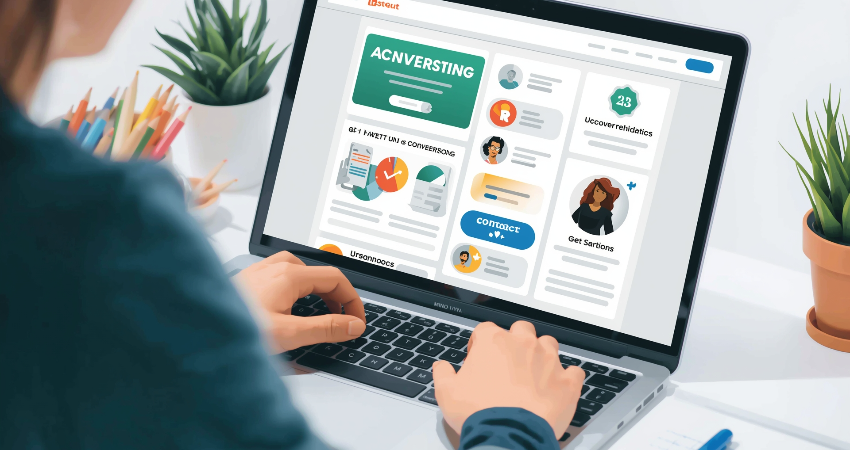
Your website has only a few seconds to impress. If the site looks dated, cluttered, or navigationally confusing, people will bounce — no matter your brilliance. Hence the above-the-fold section is so important. The top portion of the screen should have the headliner, a good call to action, and an uncluttered design that speaks to your sense of style. Use white space abundantly for an airy feel, and ensure that the call-to-action button gleams for attention.
Moving beyond aesthetics, usability ensures a great experience. If your navigation is confusing, or if the pages load slow, your visitors would hardly have any interest to get to know your work. Therefore, simplify your site structure. Only a few pages should be maintained: Home, Services, Portfolio, About, and Contact. This helps streamline the user experience and cut down on any barriers standing in the way of users converting.
Use CTAs Strategically
Every page of your freelance web design website should have a distinct goal for the page and an equally distinct CTA to support it. For example, if your homepage is targeted toward getting users to schedule a call, then your CTA must reflect that. If your portfolio is meant to show off your credibility and call users to action to contact you, then put in a CTA like ‘Let’s Talk About Your Project’. Place the buttons where they should go such as after an intro, testimonial, or showcasing a portfolio.
Consistency in design and language also makes your CTAs very effective. Continue by using colors and formats that really link such buttons together without looking disconnected. A few repeating CTAs in different multiple positions ensures that users do not end up scrolling back to do an action. Just do not do it too “seriously” – CTAs act more like prompts for the visitor to guide him to the next step.
Crafting a Portfolio That Builds Trust
Showcase Projects With Context
It should be more than showing screenshots but telling stories. They want to know what kind of projects the potential client has had and how those sites have addressed business problems. Include in each narrative the background of the client, what he/she tried to achieve, and how your design contributed to the attainment of that. Was there a drop in the bounce rate? Did the conversions improve? Be as empirical as possible.
Not just a gallery of photos, high-quality images are included in a walkthrough narrative, taking the visitor through a project. Include wireframes or sketches within your design process and justifications for selected gui features. This transparency will build trust and demonstrate ability to find solutions Reliability is one aspect of transparency, yet even for those at the dawn of their careers, framing work in well-considered terms renders it scathingly attractive.
Include Social Proof and Testimonials
Social proof is one of the strongest of all conversion really tools. When visitors see that other people have had a great experience with you, they take down their walls and start trusting you. Place testimonials from former clients all over your site — near those CTAs, if possible. Better yet, include a name, company, or photo. The more personal the testimonial, the more convincing it is.
Use logos from companies where you worked, awards that you received from competition, or where you were feted. If you are a new entrant in this field, probably lacking social proof, ask your past clients and collaborators for testimonials, or you can offer them discounted work in exchange for a good recommendation. These small credibility boosters accumulate over time and drastically increase conversions.
Technical Essentials That Support Performance
Mobile Optimization and Page Speed
No matter how lovely, if the site does not load quickly or has hidden glitches on mobile, users will not remain. Mobile-first indexing has become Google’s priority, so your mobile experience directly impacts your search rank. Your site must be responsive, with layouts that adjust itself well to different screens. Test the site on real mobile devices rather than just relying on desktop simulators.
Page speed is another killer of conversions. Optimize your images, set lazy load where appropriate, and minimize CSS and JavaScript bloat. Using tools such as Google PageSpeed Insights, search for performance bottlenecks. A fast site will not only keep users happier, but it will also boost SEO and decrease bounce rates, ensuring a greater number of visitors actually fill in your contact or call-to-action forms.
SEO Best Practices for Freelancers
SEO is indeed quite technical by nature, yet some basic techniques of SEO may bring about drastic differences. The page titles need to be descriptive; the meta descriptions relevant to the content, and header tags marked and used correctly (H1, H2, etc.) in order for search engines to comprehend the contents of the page.
Another interesting realm to work upon is internal linking: link to your services page through the homepage; link to portfolio case studies from blog posts. This places a rational structure over your navigation that contributes to the convenience of navigation by users while interpreted by search engine bots. It also helps to publish useful articles on the blog for your potential clients, for instance, “How to Prepare for Your Web Design Project”-that would bring you some organic traffic while enhancing your credibility.
Creating an Experience That Converts
Keep the Design Focused and Minimal
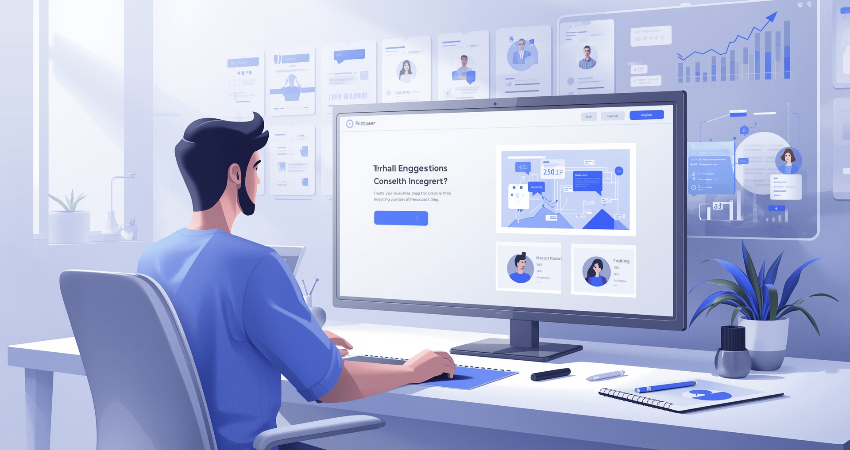
It doesn’t mean using less things; it means taking out distractions. A website must guide the user and not confuse them. There shouldn’t be any flashy animations, an overloaded sidebar, or competing call-to-action. Each of the pages should have one major goal, and all the components in the page would serve that goal. A consistent typography, simple color palette, and sufficient whitespace will maintain the visual clarity.
That rigorousness also applies to taking away what isn’t well earned. A generic line is best excluded in a testimonial. If a menu link is justified, simplify it. Remember that every element that does not speak to the purpose creates friction. Thus, you’re just trimming down the extra flesh and doubling down on clarity. It creates a smoother path to conversion and keeps the users engaged longer.
Offer Clear Paths to Conversion
Some users are ready to hire you right away, while others need some more nurturing. Your site needs to accommodate both. Provide multiple paths to conversion, for example, “Work With Me” buttons for ready-to-buy users and downloadable lead magnets (like a pricing guide or consultation checklist) for explorers. This way, you’ve got touchpoints where relationships can begin.
Contact ease is equally important. Provide a clear, simple form or booking tool that allows visitors to request a meeting with minimal fuss. Remove unnecessary fields; ensure acknowledgment is communicated once submitted. These last few moments are everything before making a conversion — if a form is broken or unclear, you’ll probably just instantly lose that lead who was ready to buy.
Conclusion
Building a freelance web design website that converts really is both an art and a science. It is not just about playful layouts or trendy animations; it is about creating an experience that communicates your value clearly, establishes trustworthiness for visitors, and guides them toward the desired action. Every piece of your website-from your messaging and portfolio to your technical performance and user journey-has a role in your conversion strategy.
As the most important marketing asset for a freelancer, your website comparably deserves to be treated like your best sales person-the one who sells for you 24/7. Continually test and revise your content, design, and CTAs according to real user behavior. Even minute or minor changes made in your layout or text or small increase in speed can become crucial factors in how much number of leads you have. With the conversion-first mentality, your website will transform from an online brochure to a valuable asset for the growth of your freelance business.