Introduction
A long-term portfolio strategy is the foundation of sustainable financial growth especially for persons and corporations interested in stability and scaling returns over a certain period. A short-term strategy-those which market movements and speculators dictate-realize gains from rapid and sudden changes in a market environment, whereas long-term strategies are all about comprehensive planning, implementation, measurement of performance, and adaptability to economic changes. Simply put, the goal is wealth accumulation with minimal risk, maximum return, and subsequent modification-we don’t live in a static world. This is a necessity for many investors who are business professionals and entrepreneurs or those with retirement plans looking for growth portfolios over a number of years.
The long-term portfolio gains its scale through evolution, without a requirement for redesigning. A scalable strategy adapts to changes in investment capital, relevant tax laws, market trends, or personal life circumstances. This should include modification of procedures to be as permissive as necessary for growth of assets and introduction of new asset classes for increases and decreases in risk exposures on demand. To not confuse scalability with constant rebalancing or aggressive alterations; a scalable design will always change and become intelligent by deferring implementing any of these changes in favor of the long-term success. In this guide, we look at the building blocks of a long-term portfolio, understanding the scalabilities of a strategy, and how to set one up that can be resilient for decades.
Understanding the Fundamentals of Long-Term Investment Strategy
Importance of Setting Clear Financial Goals
Every successful long-term investment strategy starts with a set of clearly articulated financial goals. These goals act as a blueprint for constructing your portfolio. Be it early retirement, funding a child’s education, purchasing real estate, or passing on a legacy, the goals give context on relevant investment risk, time frame, and instrument. If this foundational work are not done, then your strategy may not have direction, making it difficult to stick to during emotional periods of the market. Long-term objectives themselves are never set in stone; they evolve as life stages, family needs, and personal maturation come into play. Therefore, revisiting your goals periodically will guarantee that your portfolio remains complementary to your real-life priorities.
Financial goals can also aid in creating measurable milestones for instance- in case your retirement objective is thirty years out, you could sets checkpoints every five years to determine whether or not you’re on track. These smaller goals act as performance markers offering you insights about whether your current allocations and risk levels are sufficient. Goals also help make the emotions of investing easier. When the markets turn down, temptation to panic sell is reduced because you are focused on a long-term goal and not on daily fluctuations. Thus, creating clarity around why you’re investing in the first place becomes the first step toward a sizeable long-term portfolio strategy.
Selecting the Right Asset Classes for Longevity
Financial goals can also aid in creating measurable milestones for instance- in case your retirement objective is thirty years out, you could sets checkpoints every five years to determine whether or not you’re on track. These smaller goals act as performance markers offering you insights about whether your current allocations and risk levels are sufficient. Goals also help make the emotions of investing easier. When the markets turn down, temptation to panic sell is reduced because you are focused on a long-term goal and not on daily fluctuations. Thus, creating clarity around why you’re investing in the first place becomes the first step toward a sizeable long-term portfolio strategy.
The risk profile and time horizon should play a role in the selection of asset classes. A younger investor might have a predominantly equity-focussed portfolio in order to pursue aggressive growth and, as retirement approaches, shift relative weightings toward bonds and dividend-paying stocks to better preserve capital and generate income. Scalability of the strategy comes through increased, or decreased, exposure to these asset classes, depending on changing goals. Understand how different asset types correlate with one another, eg stocks and bonds typically behave in an inverse manner; thus balancing them will reduce volatility. Well-diversifying asset classes would keep your portfolio good for many more years, whether in a bull or a bear market.
Risk Management for Scalable Growth
Diversification to Minimize Unsystematic Risk
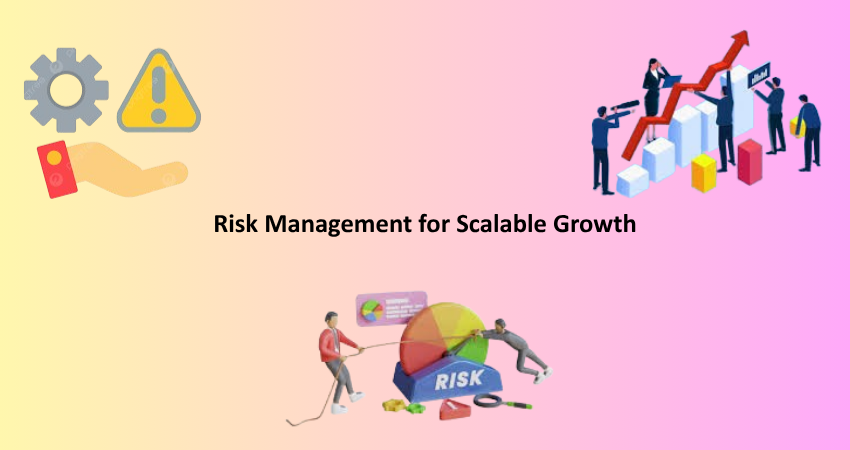
Diversification is indeed one of the oldest tools of risk management, but it is also one of the most powerful. It means not putting all your eggs in one basket. A diversified portfolio invests across industries, sectors, and geographies to significantly reduce and unsystematic risk, that is, the risk that is particular to a company or sector. For example, when one stock goes down in your portfolio, it gets lessened by other gains elsewhere. This ultimately will help smooth noise around portfolio returns reducing portfolio volatility over the long term so growth can be scaled and sustained through economic cycles.
As a matter of fact, true diversification does not entail just owning stock in different companies. True diversification may involve diversifying with respect to asset types (equities, bonds, real estate), geography (domestic versus international), sectors (technology, healthcare, utilities), and investment style (value versus growth, passive versus active). American investments, for example, might cure the ills of a poorly performing domestic market. Defensive sectors, as well as cyclical ones, would enable a portfolio to avoid being overly susceptible to economic booms or recessions. Continuous review is what makes diversification scalable—so long as your investment changes or grows, you can be sure that it is still holding a balanced risk profile.
Rebalancing to Maintain Optimal Allocation
Rebalancing means realigning the weight of each asset in a portfolio back to its original state. In the course of time, the return from the market may add to the disproportionate weight of assets in the portfolio. For example, if equities outperform fixed-income instruments, your equity allocation could rise above the threshold you want, probably exposing you to more risk than you intended. Rebalancing therefore returns the portfolio to its target structure so that the risk type remains consistent with its long-term goals. This does not entail reacting to each market move but implies a firm determination to adjust the portfolio from time to time, normally yearly or semiannually.
Scalability can only be achieved by rebalancing your portfolio. In the course of time, it grows in one direction mostly owners have too much tech stock exposure which ends up declining toward the end of a specific sector downturn. It will require selling high and buys low, which most investors know as a long-term investing principle. Many investors automated it or set specific rules such as: rebalance when the asset goes 5% out of target. This form keeps intact the risk-return profile of your portfolio while letting it grow naturally and sustainably.
Scalability Through Technology and Automation
Leveraging Robo-Advisors and Portfolio Management Tools
Investors today have therefore been in a position to construct and manage their long-term portfolios in a completely different way, thanks to technology. Robo-advisors, in particular, have truly made self-investing an inclusive factor for all investors by managing the portfolio in an automated way based on the risk tolerance level, investment goals, and time horizon. In most cases, these platforms will use low-cost ETFs for building diversified portfolios and will rebalance your assets automatically. The platforms provide a scalable solution for busy professionals and business owners that minimizes hands-on involvement while still being in cushy compatibility with long-term strategy.
In addition to robo-advisors, portfolio management tools offer valuable information regarding performance, fees, and asset allocation. Personal Capital, Morningstar, and even Excel-based trackers allow for real-time analyses that help investors make educated decisions. These platforms are capable of predicting the growth of your portfolio based on historical data and simulating various possible market conditions. Technology thus ensures that an investor can provide a consistent, efficient, and accurate investment process, all of which are vital for scaling a portfolio. Rebalancing and reinvesting dividends become automated processes, allowing your portfolio to grow freely without any micromanagement.
Automating Contributions for Long-Term Consistency
Contribute, commit, and indeed they will increase in one’s collection that will be suitable for scaling. Automate monthly or quarterly entry of funds to your portfolio, and voila! Dollar Cost Averaging -more units bought when markets are cheap and fewer when they are dear. Emotional rope with the investment goes out, along with the element of timing that even often fails at the hands of professionals. Discipline and regularity are to be strong pillars really when building wealth over the long-haul.
Enable scalability; automated contribution gives you the convenience of easily increasing your investment amounts as your income scales up without requiring you to make manual investment decisions every month. Most brokerage platforms enable you to set up recurring transfers, thus ensuring your money gets invested immediately. Whether it’s going to a retirement account, taxable brokerage, or 529 college fund, automated investing makes it easy to stick to your investment plan. This discipline pays dividends over time, especially when coupled with reinvested dividends and market appreciation. In the end, it makes the long-term portfolio quite resistant and flexible regarding sudden changes.
Evaluating and Evolving Your Strategy Over Time
Measuring Performance Against Benchmarks
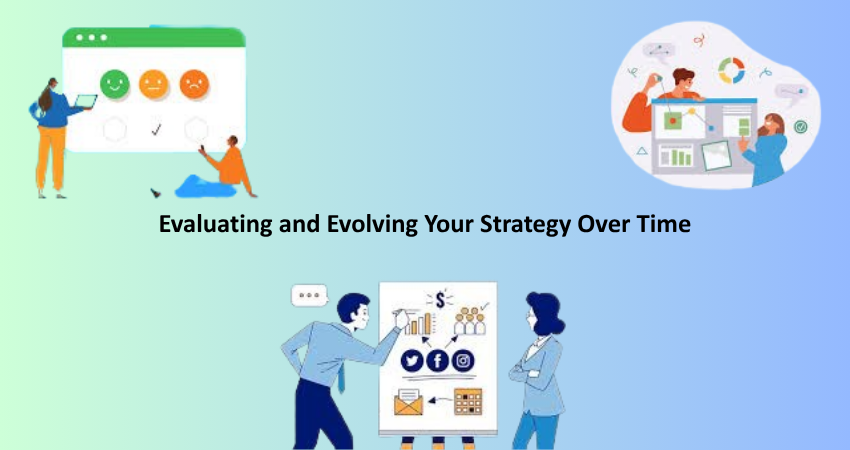
Performance evaluation proves critical in assisting you in determining whether your portfolio is still aligned with the long-term strategy. Merely saying whether the portfolio has grown might not be sufficient; for instance, what would one compare it with, such as the S&P 500, a bond index, or blended indexes according to an asset mix? Such comparison would make the returns available for comparisons to determine whether the portfolio is actually an underperformer, outperforms, or is aligned with market expectations. More importantly, this appraises the extent to which your strategy is effective and whether it requires alterations.
While reviewing performance on a regular basis, involved are metrics such as annualized return, volatility, Sharpe ratio, and drawdown. For long-term investors, it is generally consistency that matters more than brief bursts of very high returns. If your portfolio persistently underperforms its benchmark, it may well be for reasons of poor diversification, excessive fees, or incorrect asset allocation. Distinguishing between short-term market cycle underperformance versus more systemic issues in your portfolio is key. A scalable portfolio undergoes change through reasoned adjustments rather than emotional responses, and performance measurement constitutes the information with which to make those adjustments.
Adjusting Strategy to Reflect Life and Market Changes
It is rare to have a static portfolio strategy. Throughout the several decades of your life, things will change: you may change your career, start a business, buy property, have children, or approach retirement. All these events can change your financial priorities and risk tolerance. A truly scalable strategy should be flexible to allow these changes to occur without a complete overhaul. For instance, when tall grass starts to grow around your retirement, assets within your portfolio may be moved into income-producing investments or lower-risk instruments, while allocating a portion of growth-oriented investments for inflation protection.
Market conditions change, and so should your strategy. Inflation levels, interest rates, tax changes, and global happenings could all be scenarios for poor-performing portfolios. Rather than attempting to catch every emerging trend, a scalable investor would go about adjusting allocation, rebalancing risk, or considering other asset classes as warranted. A plan with great flexibility does not imply losing sight of long-range goals, but it does mean remaining proactive and not reactive. Translating intentions into actions with an advisor during these transition points can prove invaluable in fine-tuning your scalable strategy while remaining anchored to your core objectives.
Conclusion
But ultimately above all this, building a long-term scalable portfolio strategy involves investment picking. It also requires a well-organized systematic disciplined approach plus adapting to creating wealth. It will start with transparent individual goals in terms of finances and thought-through asset allocation coupled with sound risk management practices before coming in to embrace diversification, strategic rebalancing, and technological automation in simplifying portfolio maintenance. Both life changes and fluctuating markets rest will cause the strategy to be adaptable but within sound principles. Successful investors are not return-chasing but wisely prepared, consistently acting, and strategically reviewing. Scalable portfolio does not simply grow; it grows with you.
You are committing yourself to a future by having a long-term strategic view and designing a portfolio that adapts and changes when it grows. You have cost-legacy success over decades. For the individual investor, whether you are managing a portfolio for your family, this can assist you to set the principles for creating a well-performing, scalable future portfolio.